Drilling

This paper aims to establish a set of best practices for generating particle-size-distribution data from core samples.

This paper discusses the successful execution of two openhole gravel-pack completions in two Gulf of Mexico fields with depleted reservoirs.

This edition highlights three offshore technology papers that address a common industry theme: how targeted engineering solutions can reduce uncertainty, shorten operations, and make technically constrained offshore well activities more executable.
-
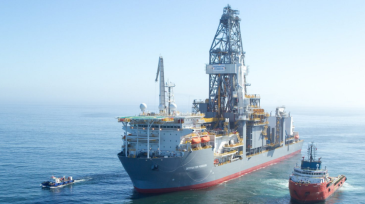
 The rig will drill an extended-reach well in the P9 Horizon field.
 -
Laboratory formation damage testing is often used to help select optimal drilling and completion fluids, but predicting the overall effect of formation damage on well performance requires further interpretation. Paper SPE 199268 presents a case for use of CFD to upscale laboratory data to quantify that effect.
-
The qualification and first deployment of a low-solids, oil-based completion fluid that incorporates a newly developed, high-density brine as the internal phase to extend the density limit is discussed.
-
Laboratory studies performed for evaluation of filter cake breaker fluid exposed limitations with a conventional test approach.
-
The combined effect of formation and completion damage is the observed well productivity development with associated skin and productivity index. Completion damage has the potential to affect well productivity to the same degree as formation damage.
-
Technology is advancing, and applications are growing, but scaling faces technological and human challenges.
-
S13Cr tubing specimens experienced stress corrosion cracking with phosphate-based completion fluids contaminated with mud and oxygen, whereas formate-based completion fluid is compatible with the tubing.
-
New proximity-based safety process watches the drill floor on board the drillship Deepwater Conqueror.
-
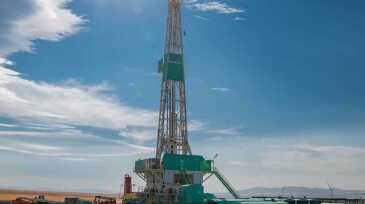
Utah FORGE has completed the first highly deviated, deep geothermal well to target depth and at planned trajectory, 60 days ahead of schedule.
-
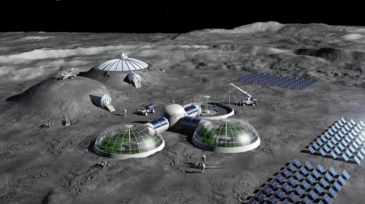
When humankind returns to the Moon to establish colonies it will be bringing with it technologies born in the oil and mining industries. The European Space Agency and Russia’s Roscosmos will be central to that effort as they prepare to land a robotic drilling system to extract oxygen and water from frozen lunar soil.