Drilling

Research by Enervus sees early 2026 permitting activity for the carbon capture and storage wells pointing to a growing approval queue, even while the rate of applications eases.

The new guidelines were released prior to reports that enhanced geothermal developer Fervo Energy experienced a blowout in Utah with no reported injuries.
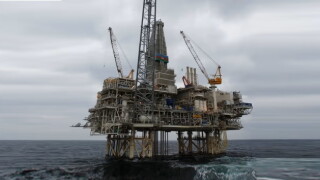
BP said it expects to keep the Azeri-Chirag-Gunashli (ACG) project in production into the 2040s by tapping into separate nonassociated gas reservoirs.
-
 On the basis of safety performance results achieved through automation downstream, an operator set out to achieve the same advances in its upstream business.
 -
Seminole Services’ Powerscrew Liner System is a new expandable-liner hanger that is set with torsional energy from the topdrive.
-
Australian technology developer MezurX is touting its newly introduced flow, density, and mud monitoring system as a significantly better alternative to the widely used Coriolis meter.
-
The standard for progress in shale development has been the drastic reduction in the number of days needed to drill a well, from more than 20 to less than 5 in some unconventional plays. But some question whether it has become a misleading metric for an industry needing more productive wells.
-
The only wells that are straight or follow a smooth curve are in the pictures in well plans. Real wellbores are shaped by the mechanics of directional drilling tools, the skills and attention of drillers, the force of gravity, and the path followed by hydrocarbon-rich seams of rock.
-
With the innovation of extended-reach and directional drilling, running casing and liner strings has become increasingly difficult.
-
While rotary-steerable systems (RSSs) dominate the offshore directional-drilling markets, the land-based markets are still dominated by conventional directional-drilling tools. This paper presents a new RSS that is being designed and tested specifically for the onshore markets.
-
The understanding and proper application of rotary-steerable systems will continue to provide a step change in the way fields are developed. Technology developed and implemented during the boom will receive closer scrutiny and evaluation during the bust.
-
Drilling the Severnaya Truba field in Aktobe, Kazakhstan, has been costly and time consuming.
-
Vimlesh Bavadiya is leading a team of engineering students at the University of Oklahoma (OU) to repeat its victory in SPE’s Drillbotics competition next year.