Formation evaluation

Canada’s development of large-scale digital drilling core libraries and open geoscience data platforms follows approaches pioneered in Australia, particularly Western Australia, through decades of government investment in geoscience data collection and preservation.
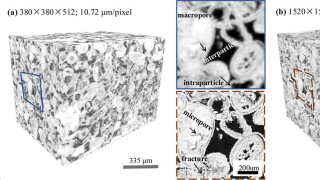
Imaging carbonate rocks at high resolution without losing scale has long been a challenge. A novel framework is introduced that enables accurate super-resolution and extrapolation of carbonate rock images, enhancing micro-CT images while preserving mineralogical and topological features for more reliable pore-scale analysis and flow simulations.

This paper presents an experiment investigating dissolution of basaltic primary minerals and conditions favorable for secondary phase formation under deep subsurface storage conditions.
-
 This paper describes a technology with the capability to map and detect lithology changes ahead of the bit in real time.
 -
Traditionally, wireline or logging-while-drilling formation-testing technology has been the most accepted means of reservoir fluid characterization. But when those fluids are contaminated by mud filtrate, acoustic data can be used for fluid characterization during downhole sampling to successfully track and quantify small changes in oil compressibility.
-
This paper describes a technique used to derive stresses for a gas-storage field and then calibrate the 1D mechanical earth model of the field.
-
The US Department of Energy’s Office of Fossil Energy and Carbon Management awarded a total of $600,000 to four software developers who won a contest to support FECM’s Science-Informed Machine Learning to Accelerate Real-Time Decisions in the Subsurface Initiative.
-
The authors outline a case study involving the integration of static measurements to improve understanding of reservoir properties and support more-accurate reservoir evaluation.
-
The authors develop a representative geostatistically based 3D model that preserves geological elements and eliminates uncertainty of reservoir properties and volumetric estimates for a Libyan field.
-
The authors examine a theory that low resistivity in a Chinese reservoir is caused by bound water trapped in clay minerals and develop an improved model for production prediction of offset wells.
-
In this new decade, the prevalence of integration is at the forefront of the scientific community. Every discipline, scientist, or company has a way in which they define the term “integration.” Regardless of how you define the effort that links disciplines quantitatively, the importance of constraining subsurface characterization to link it to production results and d…
-
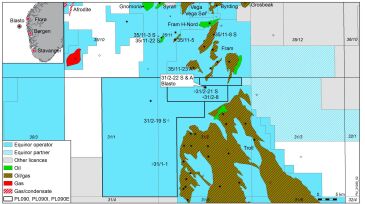
The Norwegian Petroleum Directorate and Equinor have announced the biggest discovery so far this year on the Norwegian Continental Shelf. Three wildcat wells drilled in the Blasto prospect near the Fram field confirmed the find and were then permanently plugged and abandoned.
-
An openhole advanced formation-evaluation approach is presented that enables assessment of tight-matrix and natural-fracture systems at a level not previously accomplished.