Fracturing/pressure pumping

This article from the SPE Research and Development Technical Section offers new insights to how the upstream industry can benefit from the emergence of quantum computing.

This contributed article highlights the growing importance of fiber-optic sensing and its potential to advance thanks to emerging quantum technologies.

This work evaluates CO2-based fracturing as a sustainable development approach for shale gas reservoirs in the Burgos Basin of Mexico.
-
 We’re thrilled to announce the launch of the 2025 SPE/JPT Drilling and Hydraulic Fracturing Technology Review. This exclusive, official publication will be distributed at three major SPE industry events.
 -
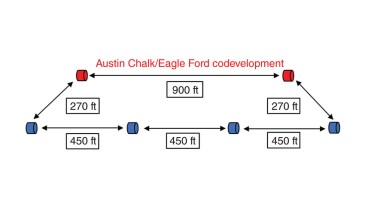
One hydraulic fracturing job can stimulate two wells, but economic success hinges on doing it in the right place for the right price.
-
Based on 6 years of firsthand experience, refrac experts share some of their biggest insights into where the US market is headed and how to identify the best candidates.
-
The new frontier of production improvement combines surveillance techniques and analysis to determine which variables boost output.
-
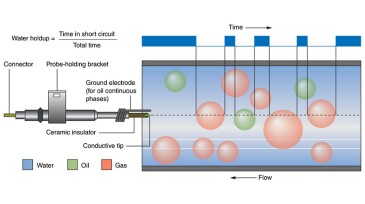
This study describes a technique combining borehole acoustic reflection imaging with production logging in a horizontal well experiencing high water cut with the aim of enabling a mitigation plan.
-
The authors investigate the utility of applying unconventional technology to low- or variably producing carbonate reservoirs to increase estimated ultimate recovery and decrease development-scale variability.
-
Hunt Energy Network invested $10 million into Quidnet to help scale up the company’s concept for geopressured energy storage to the tune of 300 MW.
-
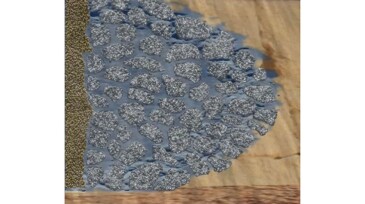
This paper describes a hydraulic fracturing pilot project using a technique that generates higher fracture conductivity to reduce the drawdown during production and improve connection through laminations.
-
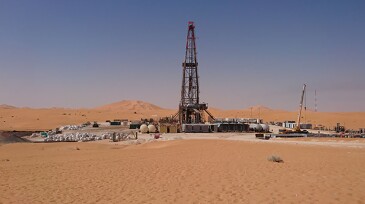
This paper presents a case study of a North African oil field producing from two Ordovician sands with differing permeabilities where significant benefit was achieved by fracture stimulating one or both intervals in two wells.
-
Fracture monitoring to optimize fluid volumes and designs remains a critical area of development. Research is ongoing with the focus on combining different monitoring technologies including tracers, fiber optics, downhole cameras, and microseismic monitoring.