Fracturing/pressure pumping

The Seismos full-scale research center opens to industry, universities, and national laboratories, advancing acoustic sensing across upstream energy, pipelines, critical infrastructure, and national security.

This article from the SPE Research and Development Technical Section offers new insights to how the upstream industry can benefit from the emergence of quantum computing.

This contributed article highlights the growing importance of fiber-optic sensing and its potential to advance thanks to emerging quantum technologies.
-
 The struggle to overcome the challenge of frac hits has led to a critical dialogue about which pathway the shale sector should take. One idea is to simply put the problem at the center of every major decision.
 -
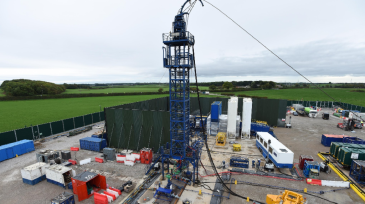
UK’s first horizontal shale well has yielded positive results after an initial flow test. But further testing—and fracturing of a second well—will have to come amid a continuation of UK’s stringent regulations on induced seismicity.
-
A new report expects US producers to drill their highest number of wells since 2014, and that completion activity may exceed drilling for the first time since 2016.
-
This paper describes a diagnostic fracture injection test-analysis program and the suitability of the results from ACAs for use in hydraulic-fracture design.
-
Diagnostic fracture injection tests (DFITs) incur direct and indirect costs resulting from the tests themselves and the extended time required for the pressure falloff, which delays the completion of the well. The benefits, therefore, must outweigh the costs if the test is to be justified.
-
Using drilling data and a downhole acoustic signal, developers aim to assess unconventional fracture networks in real time and give engineers ability to customize each stage.
-
Water management for unconventional projects continues to evolve at a rapid pace. What are some of the universal trends industry is adopting to handle higher produced water volumes and increased demand, and how do local dynamics impact the adoption of these trends?
-
ProPetro closed its deal to purchase Pioneer’s pressure pumping fleet, boosting its services in the Permian Basin.
-
An oil and gas startup has attracted the business with a major operator thanks to its ability to forecast whether production-enhancing chemicals will work as advertised.
-
Producers in Texas have claimed an economic victory with their transition to local sands that they once avoided using in horizontal wells due to their low-quality.