Fracturing/pressure pumping

The Seismos full-scale research center opens to industry, universities, and national laboratories, advancing acoustic sensing across upstream energy, pipelines, critical infrastructure, and national security.

This article from the SPE Research and Development Technical Section offers new insights to how the upstream industry can benefit from the emergence of quantum computing.

This contributed article highlights the growing importance of fiber-optic sensing and its potential to advance thanks to emerging quantum technologies.
-
 Development of a new polymer composite that degrades via hydrolysis in hot water or brine holds potential for use in structural applications for intervention-less downhole tools.
 -
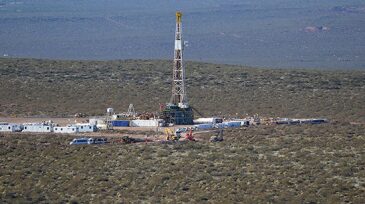
Shale explorers in Argentina are reporting that improving performance and activity is set to rise this year to boost the country’s gas production.
-
OriginClear agreed to a sales licensing deal for use of its Electro Water Separation technology at a Sinopec-operated shale gas site.
-
An advisor at Schlumberger discusses the company’s work in examining the effect of perforations on hydraulic fracture initiation.
-
Optimizing laterals by integrating data from many sources to address reservoir variability and structural challenges can increase shale well productivity.
-
This paper analyzes water production from horizontal shale wells in five sections of the Wattenberg field in northeastern Colorado. Models were developed for these wells for future water-production prediction and a spatial analysis was also conducted.
-
Kerogen Exploration is excited about the Vista Grande project, a Woodford Shale play in a west-Texas Permian sub-basin that offers further targets lying above in the Barnett Shale.
-
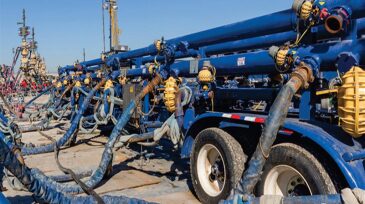
A new spread of stimulation equipment from the world’s largest service company demonstrates the latest significant step to creating a more automated oilfield.
-
In North America’s most active shale fields, the drilling and hydraulic fracturing of new wells is directly placing older adjacent wells at risk of suffering a premature decline in oil and gas production.
-
A closer look at technological and mechanical solutions being developed to limit exposure to respirable silica dust during hydraulic fracturing operations in the wake of US government regulations.