Fracturing/pressure pumping

This case study presents a procedure in which the operator compared production from wells with adjusted wettability to a control group, finding that the adjustments resulted in significant improvements in production and reductions in produced water.
Output is rising fast in the South American shale play and putting Argentina on a course to soon reach 1 million B/D.

This paper presents findings reinforcing the argument that acid fracturing is a strong alternative stimulation method to improve productivity in the Austin Chalk formation.
-
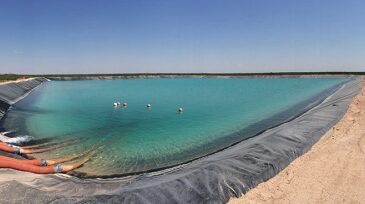
 Over the next few years, water treatment technologies are expected to continue to be deployed in the basin, as drought drives aquifer levels to new lows.
 -
While storage and logistics are critical elements of the viability of water reuse, if the water chemistry is not fit for gel fracturing formulations, it will not matter how much is stored in centrally located impoundments.
-
Evenly fracturing all clusters in heterogeneous zones is challenging in long horizontal sections penetrating heterogeneous reservoirs, as is often the case in the Eagle Ford shale.
-
This paper attempts to describe some of the common problems and to help prevent some common errors often observed in diagnostic fracture injection tests (DFITs) execution and analysis.
-
Refracturing older unconventional wells is likely to reward those willing to investigate the reasons why production declines and what can be done to restore it, according to George King, distinguished engineering adviser at Apache Corp.
-
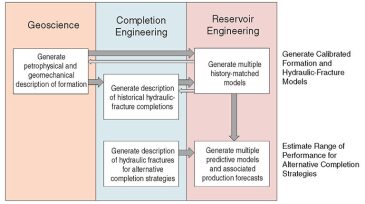
This paper describes a modeling technique by which hydraulic fractures are represented as part of the well model rather than as any form of refinement in the simulation grid.
-
This paper presents a pragmatic integrated work flow used to optimize development and guide critical development decisions in the Black Hawk field.
-
This paper discusses fracture stimulation in the first joint-venture shale-gas project with foreign companies in China.
-
Used extensively by the food, chemical, and pharmaceutical industries, the mechanical-vapor-recompression (MVR) process is viewed as a reliable method for recovering demineralized water from concentrated brines. This paper reports on performance of an advanced MVR system in north-central Texas.
-
A growing chorus of suppliers, researchers, and service companies is persuading US operators to re-examine their use of slickwater in shale plays and consider displacing it with carbon dioxide and nitrogen.