HSE & Sustainability

The department announced it plans to combine the Bureau of Offshore Energy Management and the Bureau of Safety and Environmental Enforcement into the Marine Minerals Administration.
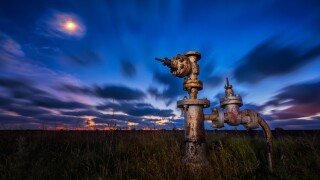
While some idle wells may be brought back into production, many will be plugged and abandoned. This paper considers repurposing certain idle oil and gas wells by using their empty steel casing for the disposal of nuclear waste.
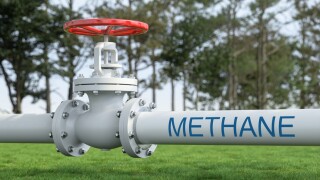
This article from the SPE Methane Technical Section looks at how, as methane regulation becomes more consequential in global oil and gas trade, operators increasingly need emissions data that can withstand commercial scrutiny, regulatory review, and independent verification.
-
 Remapping of conventional causes of accidents with human-factors guidelines highlighted consistent patterns in the causation of incidents where multiple human-factors criteria were formerly overlooked. This approach has led to changes in incident investigation, putting a focus on causes and providing efficient corrective actions to avoid the recurrence of incidents.
 -
The authors describe and assess the World Economic Forum’s initiative to develop human capital for the oil and gas industry at Satbayev University in Kazakhstan.
-
The impact of orphan wells, both on the environment and on tightening budgets, is a growing concern in the industry. Boom times result in a vast uptick in wells drilled. In bust times, when companies disappear, the liability outlook for these probes gets murky and federal and state governments start looking for answers.
-
The paper explores the biology of the invasive Tubastraea sun coral, aiming to identify methods to eliminate or diminish its spread.
-
One of the miracles over the past year has been the accumulated knowledge around the human genome and application of this science to the rapid development of efficacious vaccines. As within oil and gas, humans can rise to the challenge to solve complex problems when identified. This is playing out as we see societal drivers around climate change and net-zero carbon em…
-
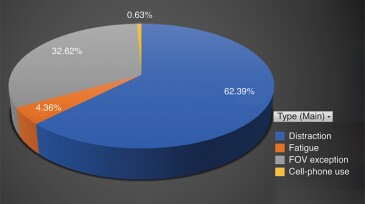
The authors’ objective is to understand further how technology can support the prevention of driver fatigue and to explore driver beliefs related to fatigue and the technology designed to assist in fatigue avoidance.
-
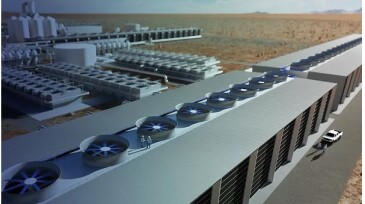
Occidental Petroleum is planning a carbon-intensive future with revenues from oil expected to be put toward pulling carbon dioxide out of the air.
-
Satellites provide an invaluable, bird's-eye view of planet Earth. But how—and how quickly—will the data materialize into meaningful actions?
-
For some, the payoff for going green can be astronomical. Others can rest assured that they will be well positioned in the transition.
-
Recent field studies have shown that measurements taken with aerial light detection and ranging are more effective in discovering various sources of methane emissions than onsite optical gas imaging (OGI) and that policy and regulations that rely on OGI alone risk missing a significant portion of total emissions.