HSE & Sustainability

The 2025 report confirms for the second year that the Appalachian Basin has the lowest methane intensity of any major oil and gas basin in the US.

The North Sea Transition Authority has advanced the UK’s plans for carbon storage by approving the drilling of a proposed appraisal well off the coast of Teesside.

Smart Seismic Solutions plans to use 50,000 nodes to examine storage potential for the Greenstore CCS project.
-
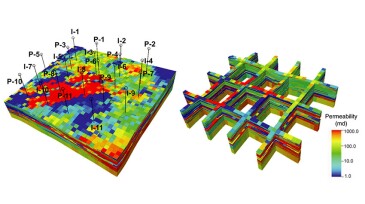
 The authors of this paper propose hybrid models, combining machine learning and a physics-based approach, for rapid production forecasting and reservoir-connectivity characterization using routine injection or production and pressure data.
 -
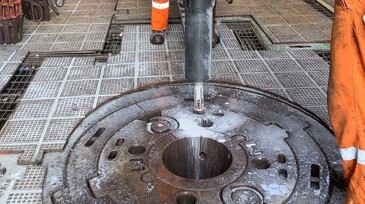
The oil and gas industry must balance global energy demands with stricter environmental regulations, particularly in drilling, where risks and complexities are higher. Innovative technologies, like those used in this stuck-pipe scenario offshore Azerbaijan, are key to overcoming these challenges and improving safety, speed, and efficiency.
-
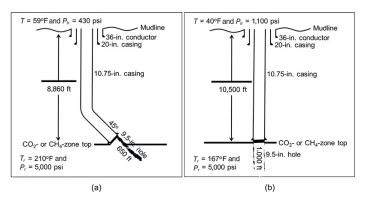
In this paper, a dynamic multiphase-flow simulator is used to evaluate the effectiveness and suitability of using a subsea capping stack to respond to a CO₂ well blowout.
-
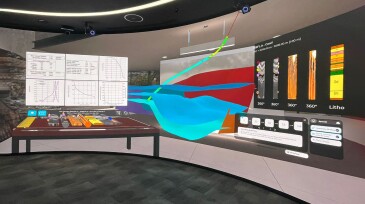
Virtual reality and related visualization technologies are helping reshape how the industry views 3D data, makes decisions, and trains personnel.
-
The objective of this paper is to outline the importance of new standards for studying hydraulic sealability of barrier materials, with an emphasis on interface analysis.
-
Australia’s Ichthys LNG facility will provide feedstock, along with production from legacy Japanese gas fields that will also serve as repositories for CO2 storage.
-
Texas regulators are taking public comment about how they should implement an EPA rule to reduce methane leaks from the oil and gas industry.
-
The institute is tasked with accelerating the deployment and scaling of cost-effective climate technology.
-
Ineos, the day-to-day operator of Greensand Future, with its partners Harbour Energy and Nordsøfonden, has made a final investment decision into the first commercial phase, with storage operations set to begin by early 2026.
-
This paper serves as a comprehensive overview of greenhouse-gas emission source data visibility in oil and gas production operations.