HSE & Sustainability
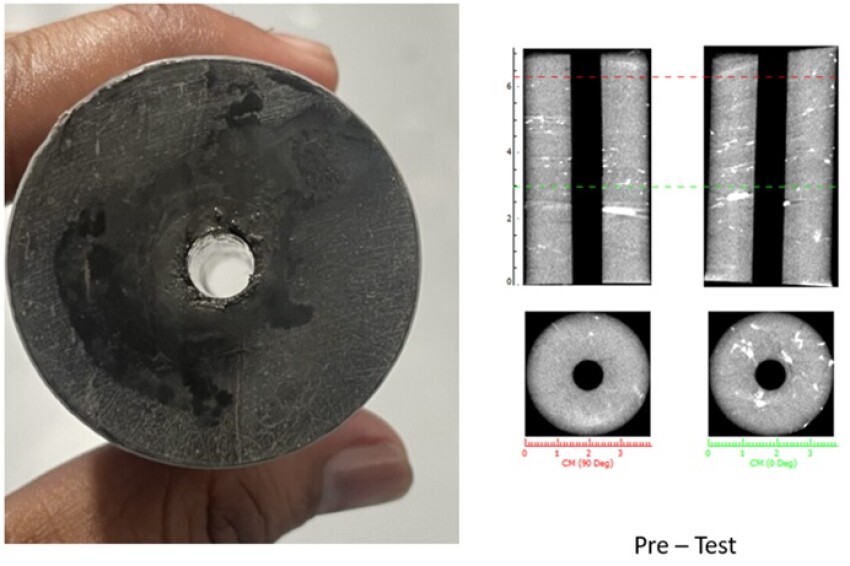
An investigative study examines the use of creeping shale formations as a more durable alternative to conventional cement barriers in carbon dioxide storage wells, potentially enabling safer long-term underground carbon storage.

The companies have released the Event Learning Taxonomy CLUE, which aims to improve the understanding of incidents beyond individual blame and toward clearer reporting and increased learning.
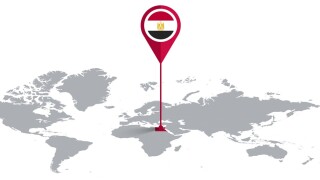
A memorandum of understanding between the companies targets technical services for safety and performance across Egypt’s onshore and offshore assets.
-
 The demands for the fresh water used in many hydraulic fracturing operations are placing pressure on water sources in some regions of the United States. Because of the high volumes of water needed for fracturing and competing demands availability of fresh water has decreased and costs have grown.
 -
This is the fifth article in a series covering water management in hydraulic fracturing in unconventional resources. The focus of this article is biological control. Additives to improve fracturing conditions can have negative effects on water treatment.
-
This paper discusses novel technologies for increasing the energy efficiency of offshore oil and gas platforms. Three case studies are in progress that are based on actual oil-producing platforms—two on the Norwegian Continental Shelf (NCS) and one in the Brazilian basin.
-
A recent webinar focused on hydrocyclones and their application for offshore oil and water separation. The discussion includes fundamental science, practical considerations, implementation and field experience.
-
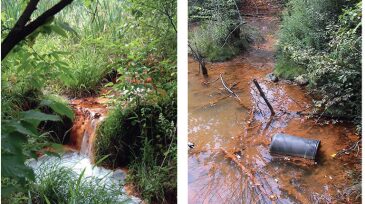
Polluted streams in Pennsylvania could provide a source of water for hydraulic fracturing and help prove a new way to clean up waterways contaminated by coal mine waste.
-
Over its 27-year history, the Center for Chemical Process Safety (CCPS) has observed that the first step toward implementing a strong process-safety-management program is obtaining top-management commitment.
-
The Abnormal Situation Management (ASM) Consortium performed a root-cause analysis on 32 incident reports gathered from public documents and member companies.
-
Produced water is an inextricable part of the oil- and gas-recovery process, and it is by far the largest-volume waste stream associated with oil and gas recovery.
-
In terms of platform technologies and extraction strategies, there are fundamental differences between the North Sea and the deepwater Gulf of Mexico (GOM).
-
The objective of this paper is to detail how water quality and injection pressure are deduced when uncertainties of input data are considered.