HSE & Sustainability
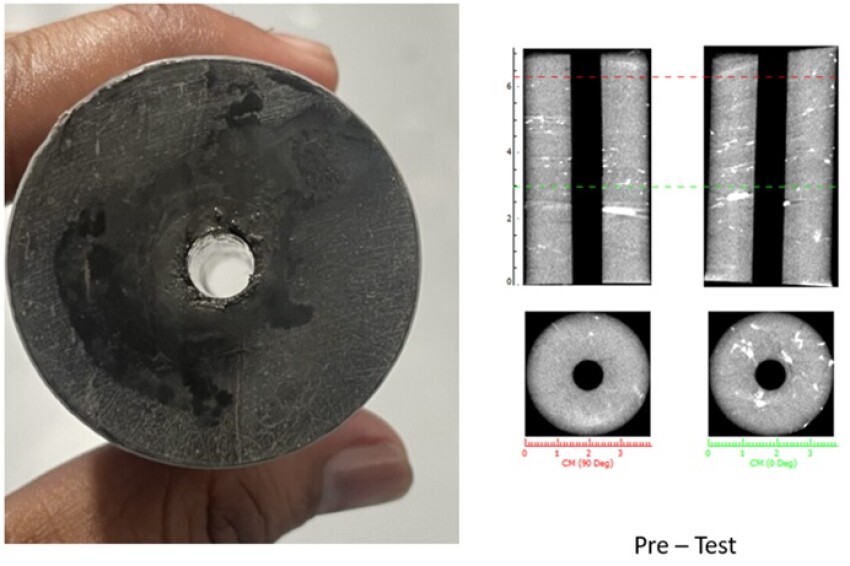
An investigative study examines the use of creeping shale formations as a more durable alternative to conventional cement barriers in carbon dioxide storage wells, potentially enabling safer long-term underground carbon storage.

The companies have released the Event Learning Taxonomy CLUE, which aims to improve the understanding of incidents beyond individual blame and toward clearer reporting and increased learning.
A memorandum of understanding between the companies targets technical services for safety and performance across Egypt’s onshore and offshore assets.
-
 Industrial accidents rarely occur because of failures in design. More often, they occur because operators make faulty decisions while under stress or because they do not follow sensible maintenance procedures.
 -
Hydraulic fracturing solutions use a gelling agent known as guar gum to transport proppant. Flowback water can have guar gum concentrations has high as 1% by volume creating treatment challenges prior to reuse or disposal.
-
Human error is identified as a root cause of accidents and incidents in 60% to 80% of the cases and a causal factor in another 50% to 60% of all mishaps across many industries.
-
I was an employee of Union Carbide Corp. (UCC), and like other employees, I know exactly where I was when I first heard the news. Analyzing the root cause of this horrible accident provides insight and opportunities to learn from the mistakes that led to Bhopal.
-
With inconsistent inlet water quality being the rule rather than the exception, sizing and operational considerations of the treatment system components must vary accordingly to make the most economic sense.
-
The growing attention on sustainable development has prompted many oil and gas companies to take a hard look at their operations and to build a framework for making them more socially responsible.
-
Human factors may be a trendy term, but human habits are the targets in effecting change in behaviors related to performing work safely. Recent research around what habits are, how they are formed and changed and how they affect our lives has important implications for creating a safety culture.
-
In this study, a pilot plant with a capacity of 50 m3/d was used to conduct flotation, filtration, and adsorption trials for produced-water treatment at a crude-oil gathering facility.
-
The simplest way to measure return on investment for an offshore water treatment system is to determine whether using the system actually reduces the risk of paying a fine for violating water pollution laws.
-
Passive fire protection (PFP) has been used as a method to avoid/delay global collapse of offshore installations. Location of PFP is often based on simplistic assumptions, standards, guidance, and methods that do not always consider the real response of the structure to fire.