HSE & Sustainability
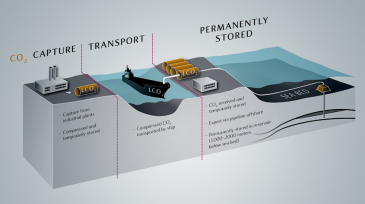
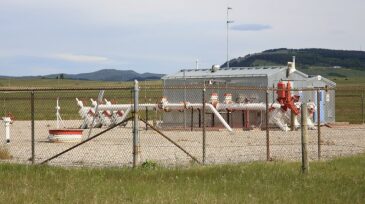
The Pawnee Carbon Sequestration Project, which would use a repurposed well, is planned to capture and store up to 400,000 tonnes of carbon dioxide, with first injection targeted for early 2027.

DNV notes that energy and industrial process-related carbon emissions will have dropped by 2050 by only 44% from today’s level, not even halfway to the net-zero pledge envisioned by the Paris climate agreement.

SPE's new Asset Integrity Technical Section brings together industry experts to advance best practices in reliability engineering, asset integrity, risk reduction, and infrastructure performance. The global community will focus on the safe, reliable, and sustainable operation of energy assets across both traditional and emerging energy sectors.
-
 Tellurian CEO Meg Gentle outlined how the US LNG market should address expected tight market conditions through 2025 while managing a transition to a carbon neutral environment.
-
About 16% of US offshore production in the Gulf of Mexico remains offline after Hurricane Laura caused mass evacuations more than a week ago.
-
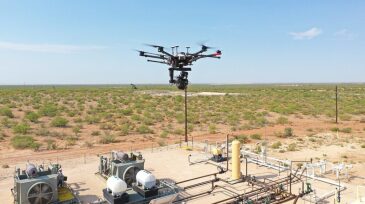
After 2 years of testing, Shell is going all in on using high-flying technology to catch methane leaks to reduce its overall emissions to less than 1%.
-
Winning innovators focused on environment, safety, and operational efficiency.
-
Advanced machine-learning methods combined with aspects of game theory are helping operators understand the drivers of water production and improve forecasting and economics in unconventional basins.
-
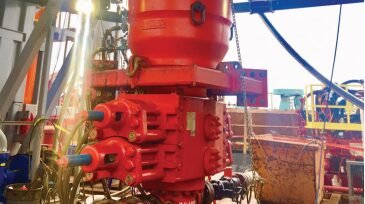
Discussed are real-world examples of the less often considered but valuable environmental benefits delivered via MPD.
-
The complete paper examines the decision to use hydrogen-sulfide- (H2S) removal technology, the cost of operation, and the unit’s availability over its lifetime.
-
In the complete paper, the authors seek to understand the effect of triazine on the electrochemical response of a carbon-steel surface in a mixed-gas system.
-
This paper describes studies that confirm that enzyme-based, environmentally preferable chemistries can be used to break polymers and mitigate H2S in various systems.
-
Williams Companies announced a near-term goal of a 56% absolute reduction from 2005 levels in greenhouse-gas emissions by 2030, aiming for net-zero carbon emissions by 2050. Why is this significant, and where can emissions be mitigated in the midstream natural-gas gathering and boosting segment?