HSE & Sustainability
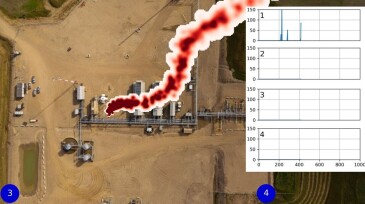
This article from the SPE Methane Technical Section features Arvind Ravikumar of the University of Texas at Austin and focuses on how the Energy Emissions Modeling and Data Lab is integrating satellite observations, facility-level measurements, operational data, and emissions inventories into more credible methane accounting for oil and gas systems.

The firm’s latest analysis puts the bulk of the blame on a fragmented supply chain.

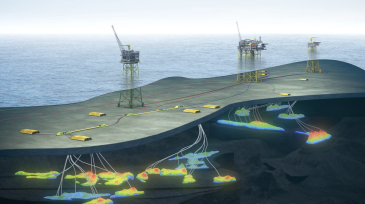
This work describes a study in which distributed data parallel training, paired with a node-local caching pipeline, enabled efficient multigraphics-processing-unit scaling for a CO₂-storage graph-neural-network surrogate while maintaining generalization.
-
 The work scope for the project runs through year-end 2027.
 -
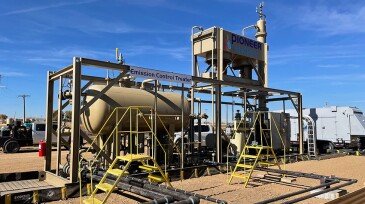
A new type of skid-mounted production facility was deployed on a pad in Weld County, Colorado, and demonstrated elimination of emissions, improved operational efficiency, and an increased crude yield of 11.3%.
-
Produced water is a brew of salt, chemicals, and minerals that oil companies have always had to deal with. Landowners had no problem with that arrangement until they could see ways to make some money from it.
-
The funding is aimed at helping connect sources of carbon dioxide to locations for geologic storage and conversion through multiple transport modes.
-
This paper reviews the Nigerian Upstream Petroleum Regulatory Commission's Safety Case Guidelines for Oil and Gas Facilities with a view to unearthing its content in the light of risk governance in the petroleum sector.
-
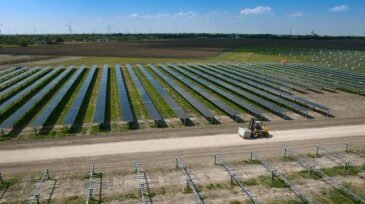
The 187-MW Peacock Solar project, expected to come online in the second half of 2024, is designed to help power a Gulf Coast Growth Ventures petrochemical complex.
-
The research could improve climate models and inform carbon sequestration.
-
The combined awards will help fund five programs across the US and state-based grants focused on pipeline and underground natural gas storage safety.
-
Ipieca, together with the International Association of Oil and Gas Producers and the Oil and Gas Climate Initiative, released the guide to help operators select and deploy methane detection technologies.
-
Large methane emissions occur from a wide variety of oil and gas industry sites with no discernable patterns, thus requiring methods to monitor for these releases throughout the production chain. This paper describes a continuous monitoring system based on the Internet of Things using methane concentration sensors permanently deployed at facilities and connected to a…