HSE & Sustainability

LibertyStream has signed a feedstock agreement with Goodnight Midstream to support its first commercial lithium carbonate facility in North Dakota's Bakken, advancing plans to extract battery-grade lithium from produced water.

The transition away from materials that contain per- and polyfluoroalkyl substances (PFAS), co-called forever chemicals, creates an opportunity to preserve historical information. Information that appears to have little operational value today may later become important when organizations need to evaluate past PFAS use. Once that information is lost, recreating it may…

TotalEnergies signed off for 30% operated stakes in the Lang Lebah and B14 gas fields offshore Sarawak on the sidelines of ADIPEC in Abu Dhabi, while also highlighting methane-reduction partnerships in Angola, India, and Southeast Asia.
-
 Energy company DTEK plans a second phase to build back greener after Russian invasion.
-
Companies licensed to drill in the North Sea will report their findings to regulators under new powers brought forward in an Energy Bill amendment.
-
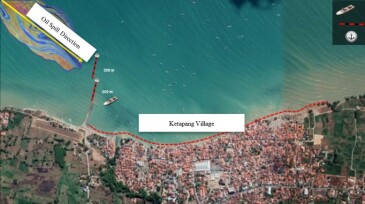
This paper presents the oil spill contingency plan adopted by Pertamina to protect sensitive areas on and around Java, the world’s most populous island.
-
The collaboration expects to redefine methane detection and contribute to emission-reduction efforts across dozens of industries, including energy, agriculture, manufacturing, and transportation.
-
SPE Journal has issued a call for papers for the 11th Comparative Solution Project (CSP) Special Issue. Organized by guest editors Anthony Kovscek (Stanford University) and Knut-Andreas Lie (SINTEF), submissions that are both directly and indirectly related to the 11th CSP will be accepted.
-
One expert says there needs to be a transfer of safety culture from the traditional energy industry to the newer offshoot of renewables.
-
A new study that analyzed 17 years of migratory bird-nesting data in Prudhoe Bay, Alaska, revealed that nest survival decreased significantly near high-use oil and gas infrastructure and its related noise, dust, traffic, air pollution, and other disturbances.
-
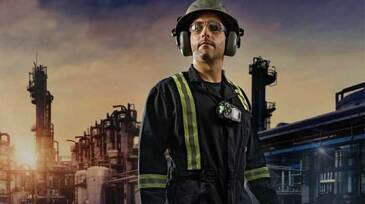
While personal protective equipment has not traditionally had the technological capabilities to help prevent worker injury due to human error, the latest safety innovations, such as gas detection wearables, can help provide visibility and data-driven insights.
-
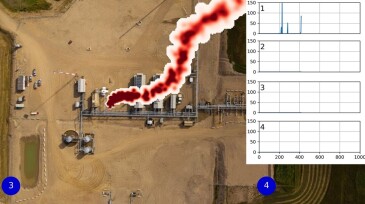
The authors of this paper describe a continuous monitoring system based on the Internet of Things (IoT) to use methane-concentration sensors permanently installed at facilities and connected to a cloud-based interpretation platform.
-
To explore motor vehicle safety, the agency is conducting interviews with workers as well as focus groups with managers and supervisors.