Inspection/maintenance

This paper introduces in-pipe inspection technologies enabling high-resolution digital measurements of tubular internal diameter and wall thickness for critical downhole applications.
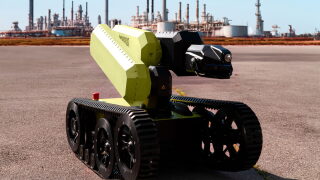
The deployment of a new heavy-duty robotic system aims to reduce workforce exposure to high-risk areas while improving detection of potential leaks.

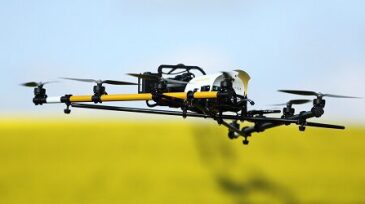
This paper explores the transformative effect of unmanned aerial systems on operational efficiency, safety, and emergency response within the Khurais oil fields in Saudi Arabia. By integrating sophisticated drone technology, improvements have been achieved in routine inspections, leak detection, and emergency scenarios.
-
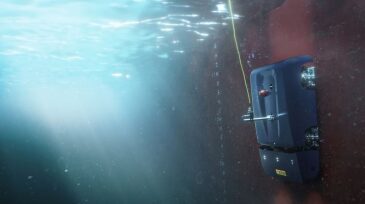
 To provide condition monitoring and combat fouling, the robot clings and moves along the hull walls. It is controlled via a 4G connection to clean and inspect the walls in line with individual vessel schedules developed through a proprietary algorithm and big data.
 -
The maritime technology company successfully completed a remote deadweight audit for a semisubmersible oil and gas drilling rig. Believed to be the first of its kind, the remote survey was developed in response to travel and social-distancing restrictions imposed during the COVID-19 pandemic.
-
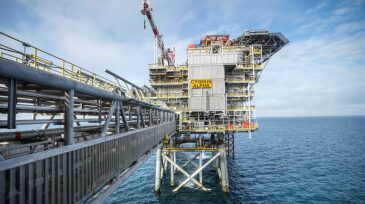
Using 3D and artificial intelligence technologies, a digital map of all three bridge-linked jackets was captured, enabling Neptune to detect asset-integrity issues early and plan fabric maintenance work on Cygnus.
-
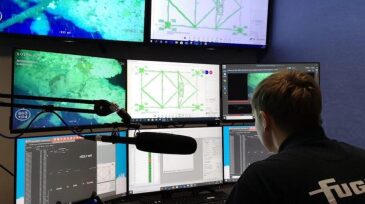
The fully remote inspection was conducted with an ROV to increase worker safety and security and reduce environmental exposure on an offshore platform.
-
Often it is too difficult to create the fault conditions necessary for training a predictive maintenance algorithm on the actual machine. A digital twin generates simulated failure data, which can then be used to design a fault-detection algorithm.
-
With their gee-whiz—albeit artificial—intelligence, robots may be the industry’s answer to jobs deemed dangerous, dirty, distant, or dull.
-
The inspection projects to assess water ingress will be done via remotely operated vehicle.
-
iHawk, Cyberhawk’s cloud-based asset visualization software, will become Shell’s next-generation visualization software platform for all onshore, offshore, and subsea assets, as well as all global construction projects.
-
The contract continues the two companies’ 8-year working relationship; in 2012, they performed the world’s-first underdeck inspection.
-
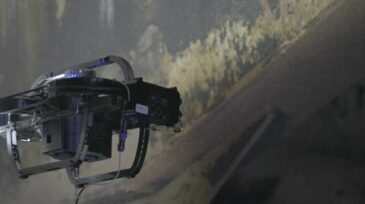
A recent test proved the feasibility of using LiDAR on remote-controlled drones to create 3D maps of the inside of tanks, increasing the safety and efficiency of inspections.