Asset Management

SPE Journal is seeking submissions for a special issue on sustainable enhanced oil recovery (EOR), highlighting innovations that boost oil recovery while reducing CO2 emissions and environmental impact. The Call for Papers opens on 15 October 2026.

Shell has reached FID on LNG Canada Phase 2, a major expansion that will double the Kitimat facility’s LNG export capacity to 28 mtpa and strengthen long-term supply to growing Asian markets.

The long-term outlook analysis says a potential shift toward new construction could push 2026 production 3% above 2025 levels.
-
 Offshore work related to the contract is slated to begin in 2024.
 -
Considering the admirable perpetual transformation of the deepwater sector and the crucial impetus for change in the industry, the yearning for aggrandized and augmented innovative advancements is needed more now than ever.
-
This paper describes the building of a geomechanical model for an offshore field that integrated drilling, geology, petrophysics, and reservoir data to play a major role in the drillability and deliverability of the reservoir.
-
This paper describes a solutions hub that integrates engineering tools to maximize value and improve decision quality using recent digital technologies.
-
One new license holds the future location of the Gale exploration well.
-
Controversial metals-rich nodules sitting on the seafloor could hold the key to increased battery production needed to support the energy transition.
-
The upstream oil and gas industry continues to drive innovation in its quest to solve the monumental challenge of supplying energy to the world in an affordable, secure, and sustainable way.
-
Geologists have identified a formation with a world-changing potential for carbon dioxide storage, but some engineering is required.
-
The operator had been in communication with government about the future of the permits since 2020.
-
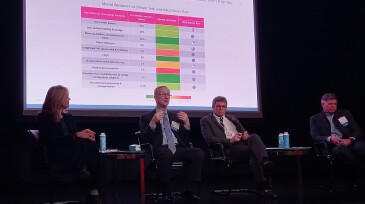
An energy transition symposium was held in February in Washington, DC, to inform and engage policymakers and the policy community in the US capital from the perspective of the engineers and geoscientists who currently work to supply 60% of the world’s energy.