Asset Management

The Society’s archive of technical papers, maps, figures, and geological data sets will be integrated into the GIX platform, enabling geoscientists to query AI agents about exploration opportunities within specific geographic regions while combining historical research with public data, proprietary information, and advanced analytics.

Despite significant progress in capturing associated gas for domestic use, Iraq remains the world’s third-largest gas-flaring country as it aims for higher oil and gas production targets.

With $9.6 billion in assets in the market, the focus is shifting from who is exiting Southeast Asia to who is positioning for entry through acquisition, according to Rystad Energy.
-
 The French major said it plans to fast-track the development of Acacia-5, expecting to increase production in Angola’s Block 17 by 6,000 B/D.
 -
The shale revolution, the Paris Agreement, and the global pandemic each transformed energy markets. Now, industry leaders say energy pragmatism is emerging.
-
More than a dozen companies have joined the advisory board of a new US Department of Energy center dedicated to expanding geothermal energy in the US.
-
The latest edition of ISO 20815 extends the petroleum industry's production assurance and reliability management framework to carbon capture, hydrogen, ammonia, and wind assets.
-
DNO outbid Genel Energy for the deal, which Genel said it may challenge, according to a filing with the London Stock Exchange.
-
Under the agreement with PDVSA, Eni will oversee the field's technical, financial, and commercial management. Separately, independent energy company GeoPark has announced its strategic entry into Venezuela through the Bare Block, a large-scale heavy-oil-producing asset.
-
Under a recently signed contract, the company will evaluate more than 120 wells across mature fields in an effort to optimize production.
-
The startup company’s Midland Basin demonstration plant, located in the Permian Basin, takes a major step toward commercialization by proving its direct lithium extraction technology can refine battery-grade lithium carbonate from produced water under multiple 24/7 production cycles.
-
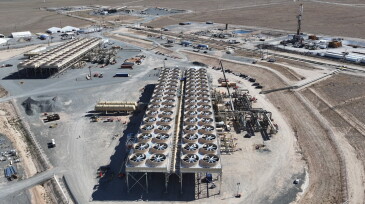
The power-purchase agreement (PPA) marks largest enhanced geothermal PPA and is expected to accelerate the delivery of continuous, carbon-free power from the Cape Station GeoCluster in Utah.
-
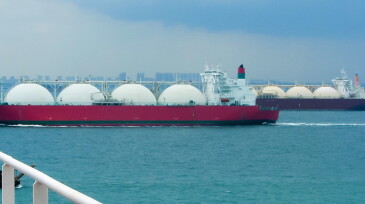
Increased capacity from new terminals and expansions drove up exports of liquefied natural gas at the quickest rate since 2016.