

Asset Management

The Houston-based developer of AI-powered submersible robotics earned the Best in Show Award and a $10,000 prize.
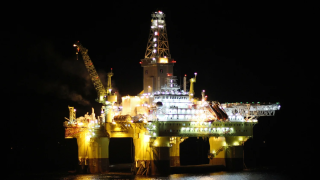
Industry fundamentals continue to strengthen as rising utilization and scarce replacement capacity support higher rig valuations.

The GRMS system of standardization and classification for geothermal resources, led by a coalition of stakeholders in collaboration with Project InnerSpace and the Society of Petroleum Engineers, will be published in November.
-
 Argentina’s President Javier Milei met with TotalEnergies CEO Patrick Pouyanné and Eni CEO Claudio Descalzi in Paris to discuss Argentina’s energy sector, including projects linked to the Vaca Muerta shale formation and the development of the Argentina LNG export project.
 -
Known as Arena, the collaboration aims to improve decision-making across increasingly complex reservoirs and growing volumes of subsurface data.
-
Robotic and autonomous systems are transforming energy operations, but their full value emerges only when paired with data science, engineering analytics, and AI/ML to turn data into decisions. The transition of the SPE Robotic & Autonomous Systems Technical Section into the SPE Data Science & Engineering Analytics Technical Section helps bridge this critical technolo…
-
Trafigura will purchase 100,000 metric tons of battery-grade lithium products under a decade-long take-or-pay contract valued at over $2 billion.
-
The Absheron gas field expansion will supply additional natural gas to Azerbaijan’s domestic market and support its export commitments to Turkey, allowing Baku to stay focused on meeting its gas export obligations to Europe.
-
A credible custody-transfer record depends on far more than the accuracy of a single meter. It is the product of an integrated measurement chain. While meter performance supports measurement-system integrity, commercial confidence also depends on traceability, governance, and authorization.
-
The Seismos full-scale research center opens to industry, universities, and national laboratories, advancing acoustic sensing across upstream energy, pipelines, critical infrastructure, and national security.
-
The Society’s archive of technical papers, maps, figures, and geological data sets will be integrated into the GIX platform, enabling geoscientists to query AI agents about exploration opportunities within specific geographic regions while combining historical research with public data, proprietary information, and advanced analytics.
-
Despite significant progress in capturing associated gas for domestic use, Iraq remains the world’s third-largest gas-flaring country as it aims for higher oil and gas production targets.
-
With $9.6 billion in assets in the market, the focus is shifting from who is exiting Southeast Asia to who is positioning for entry through acquisition, according to Rystad Energy.




Page 1 of 400