Asset Management

The Norwegian operators will collaborate on technology development, standardization, and well-stimulation solutions aimed at making tight oil and gas resources commercially viable in the NCS.

Merger unites two Appalachian leaders and adds decades of drilling inventory.

The new publication, created with the support of and in partnership with Project InnerSpace, looks at all aspects of the burgeoning geothermal industry.
-
 The $50-million investment ranks as one of Total Energy Ventures’ biggest investments to date. Dedicated to China’s energy sector, it will focus on renewable energies, the energy internet, energy storage, distributed energy, smart energy, and low-carbon businesses.
-
With presidential elections looming and energy reforms at a critical juncture, the two Latin American energy powers awarded a bevy of blocks to a who’s who of international oil companies.
-
Although the oil and gas industry can be full of surprises, its executives tend to rally around a consensus point of view on where the market and industry are headed.
-
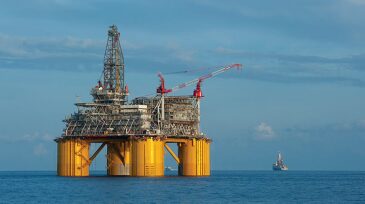
Falling costs and breakeven prices, increased operational efficiencies, and favorable government policy are at the heart of a potential short-term boon in Gulf of Mexico production.
-
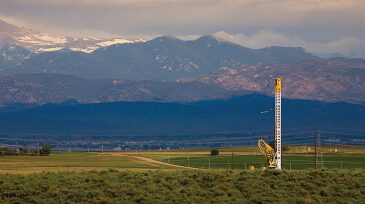
Colorado’s industry lacks the size, variety, and Wild West characteristics of Texas, but that is precisely why the Centennial State’s oil production is surging to record levels.
-
More gas is flowing from Egyptian waters and the Eastern Mediterranean with BP’s launch of its Atoll Phase One project.
-
Even a robust adoption of electric vehicles in the next 2 decades would not eliminate the growth of either global oil consumption or carbon emissions, BP Chief Economist Spencer Dale said at the rollout of the company’s 2018 Energy Outlook.
-
The US supermajor continues to evolve its global strategy by pulling out of once-promising Russian partnerships and adding to its offshore Guyana oil drilling bounty.
-
The scheme by OPEC and non-OPEC producers to collectively curb oil production has brought stability to the global market—which, as a result, could soon be awash in “a second wave” of US shale output growth.
-
Strong US production growth and rising oil prices no longer look incompatible. With a lot less oil in storage, the production is needed to meet growing demand and cover the cost of added output.