

Offshore wind

The US federal government is working to stymie offshore wind power, but proponents aren’t going quietly. Armed with data, they are taking on a sea of misinformation and hostility to defend the burgeoning resource in the US, while the rest of the world moves ahead briskly.

TotalEnergies will instead invest in the Rio Grande LNG plant, upstream conventional oil development in the US Gulf of Mexico, and shale-gas production.
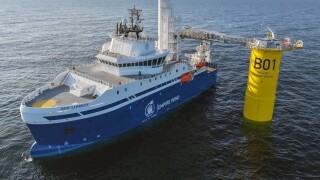
The project, which is owned and run by Equinor offshore New York, is more than 60% complete.
-
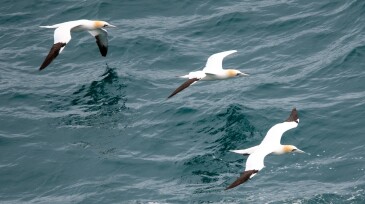
 Buoy-based camera footage, analyzed by artificial intelligence, can help reduce the risk of birds colliding with offshore wind farm turbines.
 -
Equinor said it plans to restart construction on the project, which currently is 30% complete.
-
A US government order has stopped building activity aimed at harnessing wind energy offshore New York.
-
The Interior Department has now approved more than 19 GW of offshore wind energy.
-
GE Vernova and Vineyard Wind provided an update on the implementation of their plan to safely remove the remainder of the damaged blade on turbine AW-38, remove any remaining debris, complete environmental studies, implement actions for blade readiness for service, and, ultimately, resume turbine installation and operations.
-
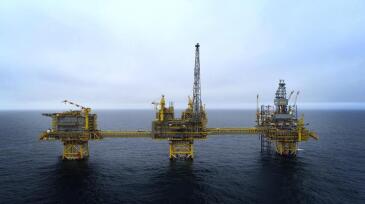
By the end of 2025, a floating wind turbine will supply power to the operator’s Culzean platform in the Central North Sea.
-
The environmental analysis found no significant effects from issuing leases.
-
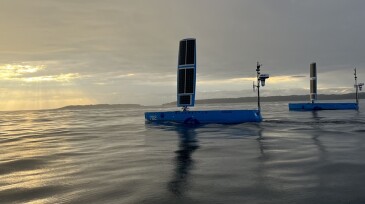
BMT and Ocius plan to deploy 1,000 autonomous vessels to collect data as “satellites of the sea.”
-
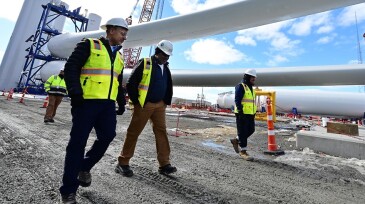
The Bureau of Safety and Environmental Enforcement (BSEE) recently conducted an inspection at the South Fork Wind project, the bureau’s first inspection of an operational offshore wind turbine in US waters.
-
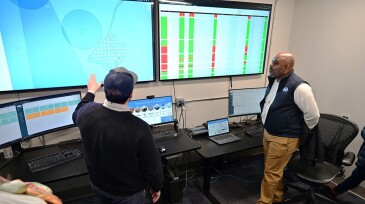
The exercise at Vineyard Wind’s Marine Coordination Center successfully evaluated Vineyard Wind’s ability to activate an incident management team and carry out the procedures in their approved oil spill response plans.
Page 1 of 9