Oilfield chemistry

This paper presents an experiment investigating dissolution of basaltic primary minerals and conditions favorable for secondary phase formation under deep subsurface storage conditions.

This study aims to investigate the efficacy of chemical additives strontium chloride and barium hydroxide in accelerating CO₂ trapping mechanisms, their effect on dissolution of carbonate-bearing minerals, and resulting poroelastic changes in the host rock.

This study reviews subsurface microbial activity, biomineralization reactions, and mechanisms prevalent for bioremediating wells, stabilizing cements, and increasing trapping during CO₂ injection and storage.
-
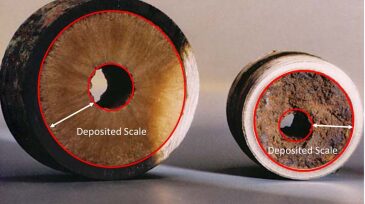
 Scaling buildup inside wellbores is a serious production problem that dramatically reduces the well productivity index. This issue has a significant cost across the industry, mostly associated with loss of production or additional operations such as well intervention.
 -
SponsoredMany oilfield applications involve use of slurries. But sedimentation of the additives that started out as powders can create problems and reduce effectiveness. A new easy to use, liquid polymer additive from BYK is the solution you need.
-
Nanotechnology has great potential to reduce cost, increase production, and even improve the sustainability of E&P operations. But, where do we stand in terms of potential vs. reality? And, is the industry ready and willing to use the technology?
-
Just like Houston’s summer heat, corrosion of metal surfaces will occur—whether you like it or not. To help you better understand corrosion, these papers describe using water surveys in a production/injection plant, testing the effectiveness of mitigation, and data evaluation using machine learning.
-
To facilitate testing and comparison of products that attenuate microbially influenced corrosion under field conditions, a method using microorganisms from a low-tide, anoxic North Sea sample was developed that allows corrosion measurements to be made for corroding biofilms grown on steel surfaces.
-
At a water treatment plant for an onshore oil field in northern Germany, formaldehyde injection was started in 2015 as a biocide. The goal of this study was to understand the chemical parameters and microbial distribution in the water system and whether formaldehyde injection was effective.
-
SponsoredParaffins present in crude oil can gel or precipitate, which can cause pipeline and production system blockages. Dow’s ACCENT wax inhibitors are high-active, aqueous-based chemistry, that efficiently control paraffin deposition in pipelines.
-
Halliburton broke ground in Saudi Arabia for the first oilfield chemical manufacturing reaction plant in the Kingdom.
-
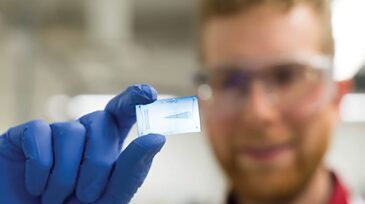
An oil and gas startup has attracted the business with a major operator thanks to its ability to forecast whether production-enhancing chemicals will work as advertised.
-
Researchers from Chevron are looking into a new approach to understand the drivers of polymer hydration. How might this affect the design of mixing systems in the field, and could it affect offshore EOR applications?