Oilfield chemistry

This paper presents an experiment investigating dissolution of basaltic primary minerals and conditions favorable for secondary phase formation under deep subsurface storage conditions.

This study aims to investigate the efficacy of chemical additives strontium chloride and barium hydroxide in accelerating CO₂ trapping mechanisms, their effect on dissolution of carbonate-bearing minerals, and resulting poroelastic changes in the host rock.

This study reviews subsurface microbial activity, biomineralization reactions, and mechanisms prevalent for bioremediating wells, stabilizing cements, and increasing trapping during CO₂ injection and storage.
-
 Engineers desperately need an alternative to acid placement through pipe, coiled tubing, or bullheading. For example, propellants have been around for years; however, their performance has not quite met the hype. Nevertheless, several case histories have been authored to suggest their efficacy; historically, some treatments have even been wildly successful.
 -
The effects of aging and temperature on the performance of one-part “just add water” granite based geopolymers are studied for application in well cementing and abandonment. Further studied is the role of zinc as a strength enhancer over a long curing period.
-
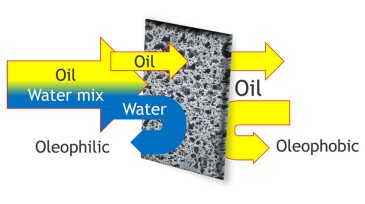
The authors of this paper discuss the use of dissolved polystyrene waste for the preparation of nanomembranes for separation of hydrocarbon pollutants from wastewater streams.
-
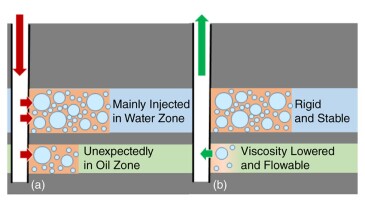
This paper presents the evaluation results of a water-shutoff agent based on an emulsion-type chemical material with nanoparticles.
-
The best wells in which to find lithium are in old conventional fields where rusty pump jacks are pulling out mostly water.
-
A new study from Saudi Aramco shows that the answer to the industry's billion-dollar corrosion problem might be sitting in your medicine cabinet.
-
Part 4 of this series provides an overview of ongoing research and recent technology improvements within the US taking place in both academia and the service industry.
-
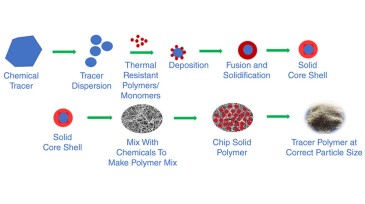
This paper sheds light on newer frontiers of tracer applications with unconventional uses to gain flow insights from an oil and gas reservoir.
-
This paper presents a family of machine-learning-based reduced-order models trained on rigorous first-principle thermodynamic simulation results to extract physicochemical properties.
-
This paper presents different geochemical approaches to assess the origin of produced gases and thermal maturity and evaluate the effect of adsorption on shale gas during production.