Onshore/Offshore Facilities

War‑related infrastructure damage is beginning to influence global energy supply chains in ways that could reshape project development and capacity growth.
Sulzer and JSIL are teaming up to provide the service for oil and gas, power generation, and industrial operations.

The deal includes Waygate’s inspection portfolios and is expected to close later this year.
-
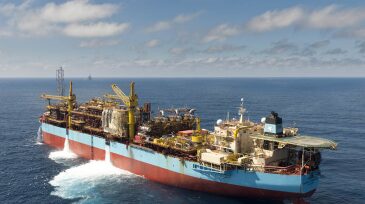
 The development of compact topside processing plants for floating, production, storage and offloading (FPSO) vessels is a growing industry trend that can reduce operating and capital expenditures over the life of the vessel, a researcher and scientist said recently.
 -
A relatively small concentration of a defoamer can have a significant impact on the dynamics of multiphase flow within a pipe, but the effect is generally temporary.
-
The ubiquitous nature of separations in facilities led to the development of the Separations Technology Technical Section (STTS) in 2011. In it's 3rd year, more activities are planned. Should you be a member?
-
In this third article of a three-part series, the results of selected gas/liquid separation case studies/sensitivities are presented to show the effects of key separator selection/sizing decision parameters, fluid properties, and operational parameters.
-
The global subsea vessels market is expected to reach more than USD 100 billion in the next five years, with demand up by 23%.
-
There are few deepwater-pipeline operators with expertise in pipeline repairs. This paper describes a strategy developed and implemented on deepwater-pipeline intervention, based on a deepwater operational experience built over a decade.
-
This paper illustrates a numerical approach to estimate the deposition profile of precipitated wax crystals and its effect on flow-related parameters in pipelines. Options for avoiding these issues are also explored.
-
In this study, software that is capable of modeling fully transient multiphase flow in wellbore and pipeline has been used to characterize the fluid-hammer effects of well shut-in and startup on the coupled subsurface and surface systems.
-
Fiber-optic-system installations have reduced the need for intervention by logging tools and have given crucial insights into wellbore integrity and reservoir production.
-
As with many monitoring and decision support tools, riser management systems originate from the engineering community so may assume a large degree of domain knowledge.