Onshore/Offshore Facilities

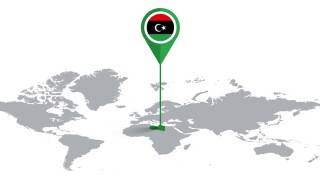
War‑related infrastructure damage is beginning to influence global energy supply chains in ways that could reshape project development and capacity growth.
Sulzer and JSIL are teaming up to provide the service for oil and gas, power generation, and industrial operations.

The deal includes Waygate’s inspection portfolios and is expected to close later this year.
-
 Fiber-optic-system installations have reduced the need for intervention by logging tools and have given crucial insights into wellbore integrity and reservoir production.
 -
As the world's supply of crude becomes heavier, many of the world’s oil producers will have to think more carefully about heavy crudes and the challenges they pose for processing, storage, and transportation.
-
Strong demand for natural gas is driving a recovery in liquefied natural gas (LNG) expenditures worldwide, with expenditures expected to reach USD 228 billion in the next five years.
-
In this second article of a three-part series, methods for improved quantification of operating performances of the gas gravity separation, the mist extraction, and the liquid gravity separation sections of gas/liquid separators are discussed.
-
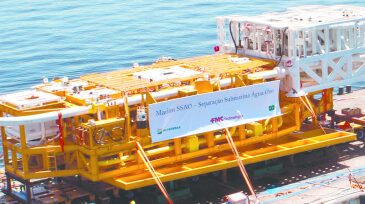
The growing desire of offshore operators to speed up subsea field development while reducing costs has fostered many compelling innovations.
-
This paper is investigates installed cost overruns of pipeline-compressor-station projects, using data from more than 200 projects. Results of the analysis show that project size, capacity, location, and year have different impacts on individual component overruns.
-
Valuation of the enhanced flexibility offered by platform-based development solutions and sequential subsea solution is difficult. This leads to the question: Are development solutions being selected without taking sufficient account of option values?
-
My, what a difference a year makes as I look back at last year’s interest vs. this year’s. Improved-oil-recovery (IOR) technology and remotely-operated-vehicle support were in the forefront last year. This year, the buzz is around high pressure/high temperature (HP/HT). This is not to say that IOR technology has vanished or become passé; far from it. But this year’s g…
-
The design of subsea equipment for pressures greater than 15,000 psi and temperatures more than 250°F is a substantial challenge. The current standard from the American Petroleum Institute (API), Specification 17D, for designing subsea equipment provides little guidance on conditions exceeding these measurements. This work has been performed to demonstrate the accepta…
-
As the need for oil and gas equipment working in hotter and higher-pressure environments continues to mount, the effort to develop an adequate set of design, material, and validation practices continues to be challenging. More-rigorous stress analysis and design methods that more closely model fast-fracture burst conditions are needed to achieve safe, reliable, and co…