Onshore/Offshore Facilities

Despite significant progress in capturing associated gas for domestic use, Iraq remains the world’s third-largest gas-flaring country as it aims for higher oil and gas production targets.

The 2026 Upstream Scale Guidelines establish a common workflow for field measurements, scale modeling, and risk assessment to support more consistent operational decisions.

Shell has reached FID on LNG Canada Phase 2, a major expansion that will double the Kitimat facility’s LNG export capacity to 28 mtpa and strengthen long-term supply to growing Asian markets.
-
 Integrity management involves availability, access, and the analysis of necessary information.
 -
Reliable separation is becoming an enabling technology to help develop remote location resources and more difficult applications, such as heavy oil, produced water, sand disposal, and back-produced fluids in enhanced oil recovery.
-
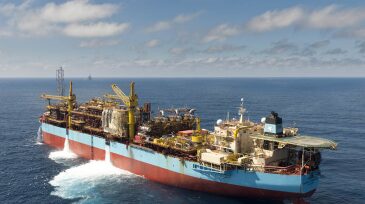
The development of compact topside processing plants for floating, production, storage and offloading (FPSO) vessels is a growing industry trend that can reduce operating and capital expenditures over the life of the vessel, a researcher and scientist said recently.
-
A relatively small concentration of a defoamer can have a significant impact on the dynamics of multiphase flow within a pipe, but the effect is generally temporary.
-
The ubiquitous nature of separations in facilities led to the development of the Separations Technology Technical Section (STTS) in 2011. In it's 3rd year, more activities are planned. Should you be a member?
-
In this third article of a three-part series, the results of selected gas/liquid separation case studies/sensitivities are presented to show the effects of key separator selection/sizing decision parameters, fluid properties, and operational parameters.
-
The global subsea vessels market is expected to reach more than USD 100 billion in the next five years, with demand up by 23%.
-
There are few deepwater-pipeline operators with expertise in pipeline repairs. This paper describes a strategy developed and implemented on deepwater-pipeline intervention, based on a deepwater operational experience built over a decade.
-
This paper illustrates a numerical approach to estimate the deposition profile of precipitated wax crystals and its effect on flow-related parameters in pipelines. Options for avoiding these issues are also explored.
-
In this study, software that is capable of modeling fully transient multiphase flow in wellbore and pipeline has been used to characterize the fluid-hammer effects of well shut-in and startup on the coupled subsurface and surface systems.