Onshore/Offshore Facilities

The events will be co-located 3–5 May 2027 at Reliant Park in Houston, Texas.

The supermajor said the fields are not expected to contribute meaningfully to its production profile by 2030.

This paper introduces in-pipe inspection technologies enabling high-resolution digital measurements of tubular internal diameter and wall thickness for critical downhole applications.
-
 Repairs to the West Delta hub were completed ahead of schedule, allowing for volumes to resume flowing from deepwater projects.
 -
A new deal between China and Venture Global is the latest in a string of US LNG commitments to Asia.
-
Talks between the operators of a trio of competing projects remain active as Canada looks to cut emissions by 40% over the next decade.
-
The White House is taking a governmentwide approach to reducing emissions in the oil and gas industry.
-
The difficulty in selling a chemical to aid subsea pipeline flow has been delivering it to the wells.
-
Over the past 30 years Caspian nations such as Azerbaijan and Kazakhstan have built thriving economies on oil and gas wealth led by global energy companies and a handful of megaprojects. As times change, that model may need to be reassessed.
-
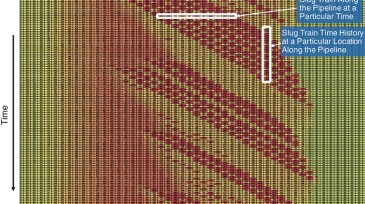
An integrated multidisciplinary work flow can improve the assessment of pipeline slugging fatigue for offshore field developments.
-
Flow-assurance effects from slug-flow engineering, design, maintenance, and operations technical concerns still create and sustain challenging technical issues requiring safe, economical solutions for both onshore unconventional and offshore conventional production facilities.
-
This paper describes a novel control scheme developed and tested on simulation for both hydrodynamic slugging and severe riser-induced slugging for a new facility in Angola.
-
In the authors’ study, a machine-learning predictive model—boosted decision tree regression—is trained, tested, and evaluated in predicting liquid holdup in multiphase flows in oil and gas wells.