Onshore/Offshore Facilities

The events will be co-located 3–5 May 2027 at Reliant Park in Houston, Texas.

The supermajor said the fields are not expected to contribute meaningfully to its production profile by 2030.
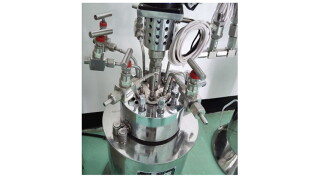
This study aims to systematically assess casing integrity and corrosion risks associated with CO2 injection in oil-recovery operations.
-
 Winning innovators focused on environment, safety, and operational efficiency.
 -
The COVID-19 pandemic accelerates transformative moments, particularly the search for the best strategy and innovation to secure offshore megaprojects not underpinned by higher oil prices.
-
The complete paper discusses a floating wind-turbine solution that is particularly cost-competitive for deepwater locations and that can unlock the possibility of deploying large wind-powered generators far from the coastline in deep water.
-
The complete paper is a comprehensive discussion of the development and deployment of the tension leg platform (TLP), one of the four major platform types that also include floating production, storage, and offloading (FPSO) vessels; semisubmersible floating production systems; and spar platforms.
-
The complete paper is an extensive review of the evolution of spar designs, focusing on the progression of work that ultimately led to the application of a transformative concept to the oil industry.
-
In the complete paper, the authors seek to understand the effect of triazine on the electrochemical response of a carbon-steel surface in a mixed-gas system.
-
A platform connecting to the Garden Banks pipeline was undamaged by Hurricane Laura, but Enbridge declared force majeure after inspecting the facilities.
-
Williams Companies announced a near-term goal of a 56% absolute reduction from 2005 levels in greenhouse-gas emissions by 2030, aiming for net-zero carbon emissions by 2050. Why is this significant, and where can emissions be mitigated in the midstream natural-gas gathering and boosting segment?
-
The AC and DC uninterruptible power system specs were prepared with the support of the World Economic Forum. Phase 3 of the program aims to develop 40 new specifications.
-
The FEED contract is expected to be converted into an engineering, procurement, construction, and installation contract in Q1 2021.