Onshore/Offshore Facilities

The declaration builds on a memorandum of understanding the partners signed with Egypt in May to process Block 10 gas at the country’s LNG export and domestic gas facilities.

Alongside the new subsea awards, Equinor strengthened its position in the 400-million-bbl Bay du Nord development by acquiring BP’s interest in the project.
The events will be co-located 3–5 May 2027 at Reliant Park in Houston, Texas.
-
 To help lower costs of offshore projects, DNV GL has launched initiatives focused on the use of composite components.
 -
A RPSEA project identified the gaps in technology that are the most pressing for multiphase-flow measurement.
-
The sources and magnitude of shear and the effects on oil droplet size can have significant consequences for downstream separation equipment performance.
-
It was my pleasure to go through 169 papers submitted to SPE in this field over the past year and select three for inclusion in this issue as well as three for additional reading.
-
The constraints of space and seaworthiness required the designers of Shell’s joint-venture floating-liquefied-natural-gas (FLNG) facility to assemble these technologies in novel configurations.
-
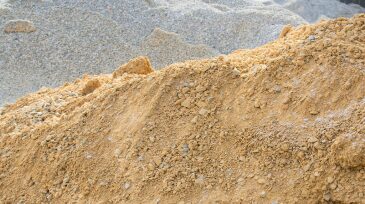
Oil and gas wells often produce sand or solids with the well fluids. Despite exclusionary well designs, these solids can cause equipment failure, completion problems, or changes in production. This paper offers a way to remove solids in separators.
-
Deepwater production has become more reliant on the integrity of subsea, umbilical, riser, and flowline (SURF) systems. A JIP explored cost-effective inspection and maintenance options.
-
In trying to reduce the footprint of facilities, operators often select the wrong piping components, hampering the performance. Selection of the right piping can avoid separation issues.
-
Techniques for well-abandonment log evaluations have been studied in the Gulf of Mexico since 2012. The new methods described in this paper consist of adding nuclear sensors to supplement the acoustic measurements and introduce novel processing methods.
-
With the current low-oil-price environment, the cost of decommissioning is seen as a key driver for the ongoing economic viability of the basin.