Onshore/Offshore Facilities

Shell has reached FID on LNG Canada Phase 2, a major expansion that will double the Kitimat facility’s LNG export capacity to 28 mtpa and strengthen long-term supply to growing Asian markets.

The 2026 Upstream Scale Guidelines establish a common workflow for field measurements, scale modeling, and risk assessment to support more consistent operational decisions.

The long-term outlook analysis says a potential shift toward new construction could push 2026 production 3% above 2025 levels.
-
 Looped lines are used to reduce pressure drop and increase flow capacity, but information on the flow behavior or predictive methods are not available for these systems.
 -
Natural-gas-infrastructure reliability is critical for the energy sector. When capitalizing on old pipelines to transport natural gas, operators run the risk of partial blockage. In this study, the authors develop a multirate test method to detect partial blockage in a gas pipeline.
-
Subsea tieback of a new field to an existing offshore production facility is one option to minimize development costs.
-
Lessons learned in debottlenecking a “dirty” triethylene glycol contactor at the ExxonMobil Upstream Research Company’s LaBarge Black Canyon Facility in Wyoming highlight the results of work performed between 2001 and 2004.
-
This paper describes a new direct electrical heating method in flexible-pipe systems. The method effectively expands the operational envelope of flexible unbonded pipes with greater control of hydrate plugs and wax precipitation by distributed heating along the entire pipe length,
-
Medium-voltage electric heating systems offer reduced installation cost and increasing efficiency for multimegawatt oil and gas heating applications compared with low-voltage systems. For offshore applications, the systems offer the added benefit of both space and weight reductions.
-
Thermoplastic composite pipe (TCP) is a spoolable, fully bonded pipe with glass or carbon-fiber reinforcements. While most often used in deep water, the combination of a solid wall, spoolability, and corrosion resistance makes TCP attractive for production-flowlines in shallow water also.
-
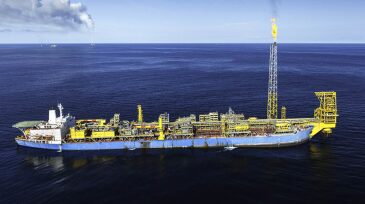
This paper presents the development of Sapinhoá field, covering the fast-track transition and decision-making process, from appraisal to conceptual and basic engineering of the Sapinhoá pilot project and on to its subsequent execution, highlighting the challenges, lessons learned, and results.
-
In this eighth articles of the series, level settings and control in gravity separators are addressed.
-
Optimization of maintenance costs is among operators’ main concerns in the search for operational efficiency, safety, and asset availability. The ability to predict critical failures emerges as a key factor, especially when reducing logistics costs is mandatory.