Production
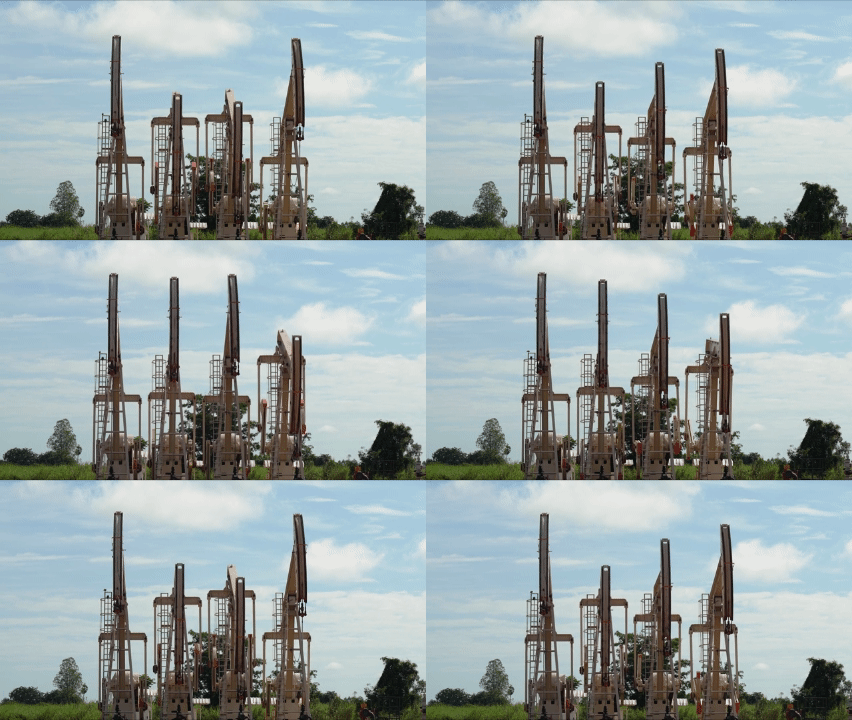
This paper proposes a novel, real-time pump failure prediction method using machine learning with scaled load ratio to accurately predict pump failures using only surface pump load data.

Five agreements target more than 11 Tcf of offshore gas and include flare-reduction technology.

Disputes over tanker fees and the ongoing military operation in Lebanon represent potential fault lines for the tentative peace deal.
-
 Conflict‑driven price gains may be offset by higher costs, supply‑chain risks, and a limited appetite for new drilling activity.
 -
This paper describes an approach to creating a digital, interconnected workspace that aligns sensor data with operational context to place the completions engineer back into a central role.
-
This paper demonstrates how the integration of multiphysics downhole imaging with machine-learning techniques provides a significant advance in perforation-erosion analysis.
-
Data centers could add up to 6 Bcf/D of US gas demand by 2030, creating a new opportunity for producers and reshaping how oil companies think about electricity supply.
-
This paper presents a workflow that leverages a multiagent conversational system to integrate data, analytics, and domain expertise for improved completion strategies.
-
Examples demonstrate how an Integrated Operations Center as a Service (IOCaaS) model, powered by artificial intelligence, reduced costs by 5% and increased production by 6% in Canada.
-
This paper demonstrates the effectiveness of integrating dynamic gas separation with existing gas-avoidance methods within the same electrical submersible pump string to address these issues.
-
The three featured papers illustrate how emerging computational methods—ranging from gradient-based optimization to data-driven proxies—are reshaping reservoir characterization, uncertainty assessment, and real-time decision support across diverse subsurface applications.
-
Two examples from ONGC show how supervised AI-driven automation scaled well modeling across hundreds of offshore wells, saving more than 1,000 engineering hours.
-
The operator developed a solution that has kept the well at stable production for over a year after treatment.