Production

The legacy of per- and polyfluoroalkyl substances (PFAS) is a persistent problem in many industries, including upstream oil and gas. In this Q&A, remediation expert Grant Scott presents the trouble with these “forever chemicals” and the mitigating efforts being used.

As the pace of new discoveries slows and high-quality prospects become harder to find, oil companies may need to rely more heavily on mature fields to maintain production and support future supply.

With confidence in subsea boosting performance growing, BP is incorporating pumping systems into both greenfield developments and brownfield expansions.
-
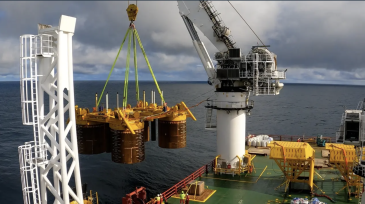
 The Halten East project in the Norwegian Sea involves fields that if developed independently would be considered too marginal to be economically attractive.
 -
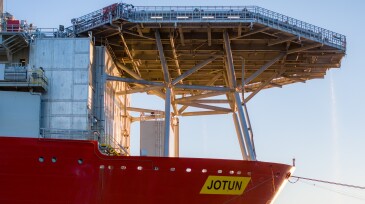
The production unit for the Balder field in the North Sea is expected to go on-stream in the second quarter of 2025 following the staged tow-out of the FPSO.
-
Industry leaders say they believe oil and gas will continue to play a pivotal role in the energy mix in the lengthening energy transition timeline.
-
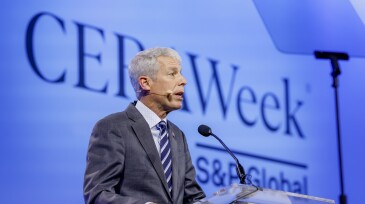
Experts speaking at CERAWeek 2025 lauded industry's shift from focusing on the energy transition to prioritizing oil production.
-
Finalists will present their technologies before the judging panel on 24 March, and the recipient of the award will be announced 25 March during the SPE/ICoTA Well Intervention Conference and Exhibition.
-
Technology and partnerships play a pivotal role in how the oil industry finds and produces energy from frontier regions and brownfields, both now and in the future.
-
Kuwait Petroleum’s managing director of planning and finance said that more investment will be needed to keep Kuwait’s mature oil fields flowing while production is brought on stream.
-
This article is the second of a two-part series on produced-water management in the Gulf of Mexico and covers four themes: equipment, process configuration, operations, and effluent quality.
-
The supermajor is making a major course correction as it plans to slash renewable investment and focus more on oil and gas development.
-
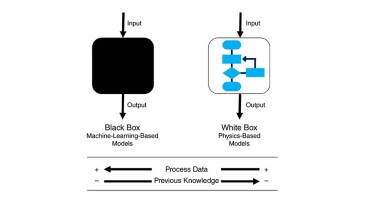
The authors propose a hybrid virtual flow and pressure metering algorithm that merges physics-based and machine-learning models for enhanced data collection.