Production

The loan to Arena Energy will generate an estimated 38,600 B/D in new production from 22 platforms in the Gulf.

The transaction is expected to strengthen the company's position in Alberta’s oil sands and unlock annual synergies of $54 million.

Sponsored
This case study by CNOOC and Halliburton highlights how enhanced multizone sand control treats eight unequal zones in one trip and reduces completion time by 60 hours in Bohai Bay, China.
-
 This paper describes the first riserless coiled tubing services operation performed in a live subsea well and the associated improvements in efficiency, cost savings, and safety.
-
This paper describes a case history in the UAE in which the cleanout of scale contaminated with naturally occurring radioactive material was conducted successfully.
-
In the wake of the falling number of exploratory wells in the country, Brazil-owned Petrobras addressed audience concerns as well as outlined new avenues for production at the Offshore Technology Conference.
-
Best practices are not static; they evolve alongside advancements that redefine what is achievable.
-
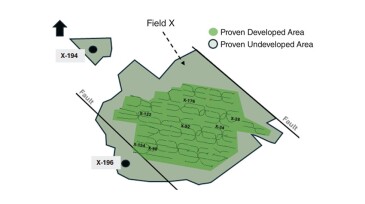
This study leverages oil-fingerprinting technology and geochemical data to evaluate the fluid connectivity between a main field and its stepout wells.
-
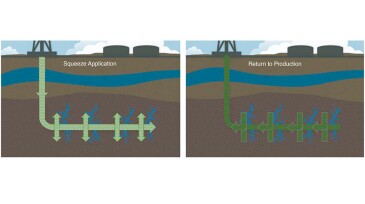
This paper provides details of a pilot study conducted on multiple wells, showcasing the potential of a novel biotechnology in Bakken enhanced oil recovery.
-
This year’s Acidizing feature presents three SPE conference papers that discuss an important battlefront of enhanced production—carbonate reservoirs, those plays whose heterogeneity, reactivity, and flow behavior pose challenges that remain comparatively little-understood, despite the industry’s intensified efforts to maximize their output.
-
Updates about global exploration and production activities and developments.
-
Three case studies consider the gas-related reasons electrical submersible pumps fail in unconventional shale environments.
-
This article presents a comparative study evaluating four machine-learning approaches, including three deep-learning methods, for forecasting gas and condensate production over a 5-year horizon.