Production

This paper aims to establish a set of best practices for generating particle-size-distribution data from core samples.

The solvent-based technology involves a modular treatment process that uses a proprietary catalyst designed to safely and sustainably remove hydrogen sulfide (H₂S) from sour gas streams using either produced water or an alkaline water as the treating media.

With confidence in subsea boosting performance growing, BP is incorporating pumping systems into both greenfield developments and brownfield expansions.
-
 Production vessel has the capacity to produce up to 180,000 B/D of oil.
 -
Do you know how many of your organization’s wells are artificially lifted? Or, more importantly, do you know what fraction of your production volumes are dependent on artificial lift? I would wager that the percentages are higher than you would expect, and I encourage you to seek out that information and share it.
-
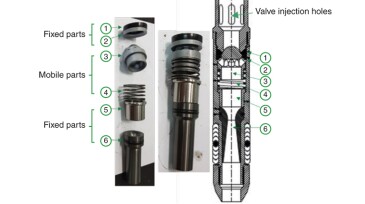
This paper describes a comprehensive approach to mitigate systemic failure in gas-lift valves in presalt wells.
-
Friction reducers play multiple critical roles in fracturing. A challenge in selecting the best one for the job is the growing evidence that performance varies, but objective performance measurements are lacking.
-
This paper describes a study aiming to provide input for the well-completion-strategy design and operational parameters for a carbonate reservoir experiencing electrical-submersible-pump failures.
-
At peak, combined fields should produce more than 12,600 B/D of oil.
-
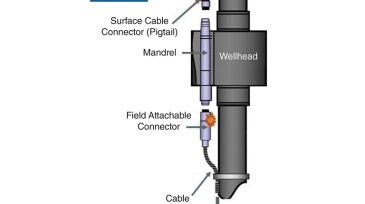
This paper describes the findings of a root-cause analysis of wellhead-penetrator failures in Canadian steam-assisted gravity-drainage operations and the mitigation measures taken.
-
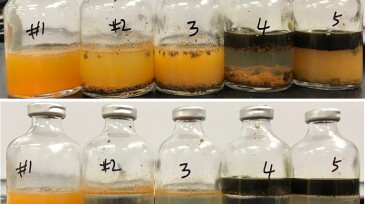
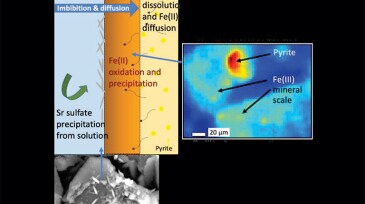
A review of the properties of iron compounds and their impact in shale produced water treatment with an emphasis on their colloidal forms. A wide range of problems is associated with these compounds in produced water including emulsion stabilization, oil-coated solids, pad formation in separators, pipeline solids, and plugging of water disposal formations.
-
New case studies from this year's Offshore Europe were a reminder of how sustaining subsea reservoirs as they age often calls for determined and innovative engineers.
-
The obsession with better hydraulic fracturing has steadily pushed on shale production in year one, but the decline remains steep. Chemistry could help explain, and perhaps extend, the short productive life of these wells.