R&D/innovation

With funding opportunities improving, developers and researchers are focused on shortening project learning cycles and reducing uncertainty to attract more capital and speed deployment.

By integrating reservoir simulation, probabilistic seismic hazard and risk assessment, and machine learning, this study provides a practical framework for translating complex geoscientific research into evidence-based policy and field operations, achieving measurable reductions in seismic risk indicators in the Groningen gas field.

The US Department of Energy has awarded more than $99 million to 21 projects that will advance geothermal development through field-scale testing of next-generation technologies and exploration drilling programs across the US.
-
 Transition requires action, not perfect technology, but challenges remain around scalability, cost, and revenues.
 -
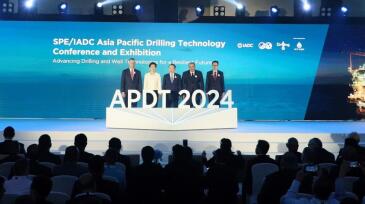
The highly anticipated SPE/IADC Asia Pacific Drilling Technology Conference was held in Bangkok and gathered over 1,000 professionals from the drilling and well technology communities across more than 30 countries.
-
The Earth has huge capacity to store carbon dioxide emitted from energy production. This article discusses the technology of carbon capture, utilization, and storage (CCUS) and its challenges.
-
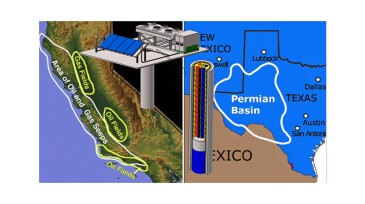
Geo2Watts is transforming abandoned oil and gas wells into renewable energy assets using solar power and sand. In this exclusive Q&A, co-founders Phil Cruver, Bill Bartling, and Ken Murray share their vision and the innovative technology behind their “borehole battery.”
-
A proprietary direct lithium extraction technology proposes using electrodialysis to produce lithium, green hydrogen, and fresh water from geothermal brines while repurposing oil and gas infrastructure. Meanwhile, new research reveals that deepsea polymetallic nodules generate oxygen through electrochemical processes at depths of up to 13,000 ft and may also hold valu…
-
his paper presents research and application of a sustainable, low-density geopolymer alternative to Portland cement for cementing applications in low-temperature wells.
-
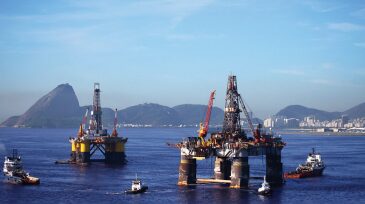
A new partnership aims to leverage technology developed for geothermal wells to create a new drilling system for complex offshore wells.
-
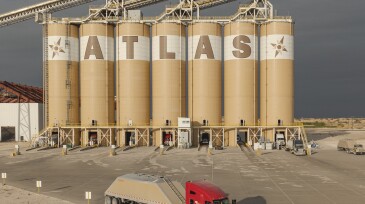
The company behind a 42-mile sand conveyor system is now leaning into autonomous vehicles for proppant logistics.
-
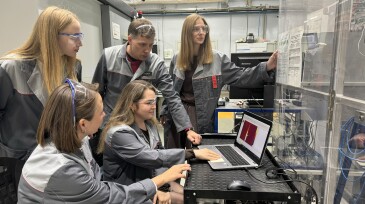
The process developed by Moscow’s Skolkovo Institute of Science and Technology shows promising results in the laboratory, suggesting a novel method to produce hydrogen from natural gas reservoirs while trapping carbon in permanent storage.
-
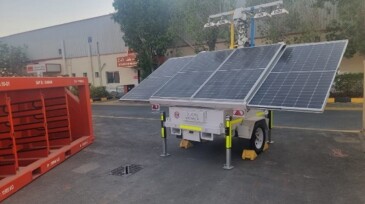
SponsoredTAQA bears the burden of reducing carbon emissions from the fossil fuel energy cycle and pays its undivided attention to decarbonizing its operations. In this article, it sheds light on its initiatives and approach to decarbonizing the oil and gas exploration and production industry.