Reservoir characterization

Known as Arena, the collaboration aims to improve decision-making across increasingly complex reservoirs and growing volumes of subsurface data.

Three papers are highlighted as the primary contributions because of their broad industry relevance. They focus on improving formation particle-size characterization, expanding the application of openhole gravel packs in depleted and compartmentalized reservoirs, and advancing the understanding of capillary pressure in sand production.

By integrating experimental and mathematical modeling approaches, this work aims to advance the understanding of sand-detachment dynamics and formation instability under varying saturation conditions.
-
 AIQ, ADNOC, and SLB announced a new software suite that integrates artificial intelligence into reservoir analysis and field development projects.
 -
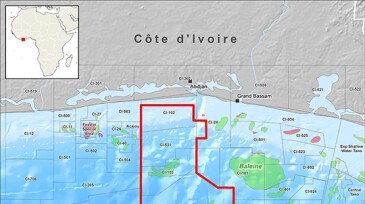
The project aims to reimage a 6,400-km2 seismic data set near the recently discovered Baleine field.
-
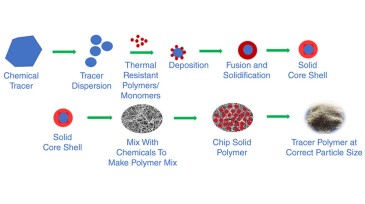
This paper sheds light on newer frontiers of tracer applications with unconventional uses to gain flow insights from an oil and gas reservoir.
-
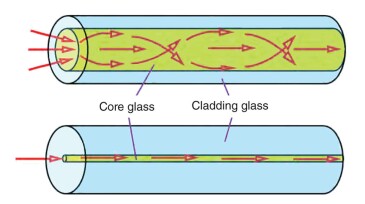
This paper presents a comprehensive technical review of applications of distributed acoustic sensing.
-
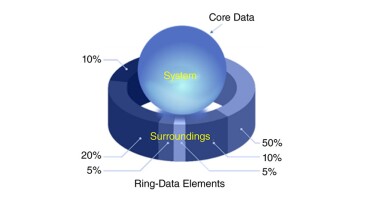
The authors of this paper describe a technology built on a causation-based artificial intelligence framework designed to forewarn complex, hard-to-detect state changes in chemical, biological, and geological systems.
-
Decades of experience injecting fluids into the ground has revealed a fundamental truth: No two injection sites are the same. A thorough understanding of site-specific conditions is essential to ensure safe and secure long-term subsurface disposal of carbon dioxide.
-
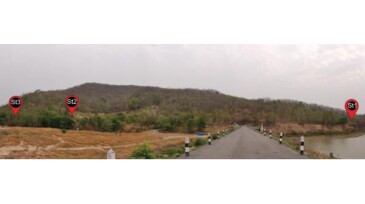
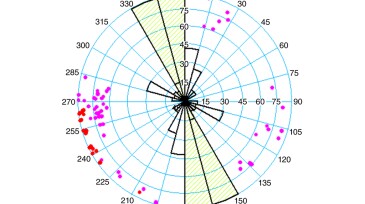
The authors of this paper describe the characterization of fractures in the Mesozoic sandstones of the Phra Wihan Formation exposed at the southern part of Uttaradit Province in Thailand.
-
This paper proposes a multidomain approach to tackle petrophysical and geomechanical aspects of a fracture system governing the carbonate layer of an exploration well in Kuwait to assess producibility and qualification for stimulation.
-
This paper proposes a data-driven proxy model to effectively forecast the production of horizontal wells with complex fracture networks in shales.
-
Part 3 of this series looks at the importance of performance analysis and how to generate the economic benefit for solving conformance or sweep efficiency problems. The economic elements of this review are very basic, but they will help you to determine a more-accurate understanding of the true economic benefit.