Reservoir characterization

Known as Arena, the collaboration aims to improve decision-making across increasingly complex reservoirs and growing volumes of subsurface data.

This study explores the carbon-capture and mineralization potential of ultramafic rock powders when exposed to flue gases generated from combustion of crude oil and mesquite-derived charcoal.

Three papers are highlighted as the primary contributions because of their broad industry relevance. They focus on improving formation particle-size characterization, expanding the application of openhole gravel packs in depleted and compartmentalized reservoirs, and advancing the understanding of capillary pressure in sand production.
-
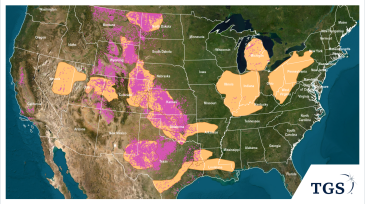
 SponsoredIn a partnership with the American Institute of Formation Evaluation, TGS is now the only US data vendor offering report-sourced drillstem tests, available through TGS Well Data Analytics.
 -
This paper describes natural fractures and their effect on hydrocarbon productivity in the Vaca Muerta shale formation.
-
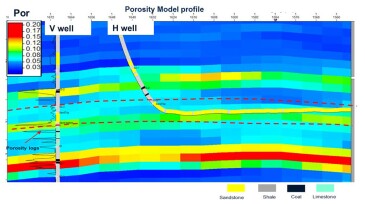
The authors of this paper describe a solution using machine-learning techniques to predict sandstone distribution and, to some extent, automate the process of optimizing well placement.
-
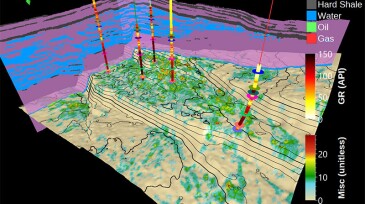
The seismic and well data investigation tool integrates work flows to provide a consistent analysis of reservoirs.
-
In Part 2 of a series of articles, the author focuses on generating a connection between the problem types and various methods of trying to solve these problems.
-
Artificial intelligence (AI) tools have been used in geological survey methods for many years. Gaining insight into the scale and trends of this implementation could assist surveyors in making informed decisions about buying or developing new technologies.
-
This paper describes the building of a geomechanical model for an offshore field that integrated drilling, geology, petrophysics, and reservoir data to play a major role in the drillability and deliverability of the reservoir.
-
The authors of this paper present an approach integrating characterization of paleo zones, parameterization of paleo-zone conductivity, and application of flow profiles in a history-matching study of a dual-porosity/dual-permeability model.
-
The coupled geomechanical and dynamic flow simulation work flow described in this paper relies on a multidisciplinary approach to meet future peak gas demands and support clean-energy initiatives.
-
In Part 1 of a series of articles, the author highlights candidate selection and problem clarification. This section describes how the success rate of solving conformance problems is improved by reducing assumptions and improving your problem understanding prior to executing a solution.