Reservoir characterization

Known as Arena, the collaboration aims to improve decision-making across increasingly complex reservoirs and growing volumes of subsurface data.

This study explores the carbon-capture and mineralization potential of ultramafic rock powders when exposed to flue gases generated from combustion of crude oil and mesquite-derived charcoal.

Three papers are highlighted as the primary contributions because of their broad industry relevance. They focus on improving formation particle-size characterization, expanding the application of openhole gravel packs in depleted and compartmentalized reservoirs, and advancing the understanding of capillary pressure in sand production.
-
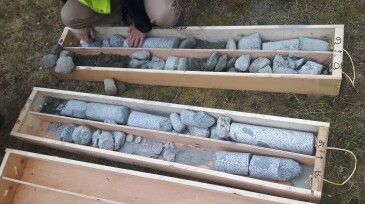
 Researchers from Skoltech have trained a neural network to recognize rock samples in core box images efficiently. The process has sped up analysis by up to 20 times and made it possible to automate the description of rock samples.
 -
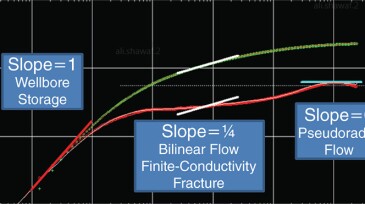
The paper presents key lessons learned in efficiently designing pressure-buildup tests in tight sandstone reservoirs.
-
The two companies have teamed up in an attempt to cut downhole costs with a project that aims to extract more information from reduced data-acquisition programs.
-
This study describes application of the iterative ensemble Kalman smoother application to a low-permeability coalbed methane field in Australia.
-
This work evaluates and compares the performance of rate normalization and pressure deconvolution for both synthetic and tight-oil examples.
-
The authors describe an approach to achieve reliable estimation of field gas initially in place.
-
The COVID-19 pandemic naturally has affected SPE meetings, causing many to be rescheduled or postponed indefinitely, but SPE papers continue to be a crucial source of technical knowledge. The selected papers explore simple and complex innovative approaches toward reservoir characterization to work around the absence of certain data.
-
The authors describe an integrated multiscale data methodology involving machine-leaning tools applied to the Late Jurassic Upper Jubaila formation outcrop data.
-
The authors develop a collocated finite-volume method to study induced seismicity as a result of pore-pressure fluctuations.
-
This paper describes the application of a synthetic seismic-catalog-generation method followed by application of a neural network on a seismic data set for an oil-producing field in the North Sea.