Reservoir characterization

Known as Arena, the collaboration aims to improve decision-making across increasingly complex reservoirs and growing volumes of subsurface data.

Three papers are highlighted as the primary contributions because of their broad industry relevance. They focus on improving formation particle-size characterization, expanding the application of openhole gravel packs in depleted and compartmentalized reservoirs, and advancing the understanding of capillary pressure in sand production.

By integrating experimental and mathematical modeling approaches, this work aims to advance the understanding of sand-detachment dynamics and formation instability under varying saturation conditions.
-
 Widely held images of what happens when a well is fractured often bear little resemblance to what actually happens underground.
 -
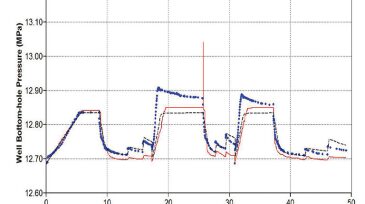
In the complete paper, a new assessment of the WAG-hysteresis model, which was developed originally for water-wet conditions, was carried out by automatic history matching of two coreflood experiments in water-wet and mixed-wet conditions.
-
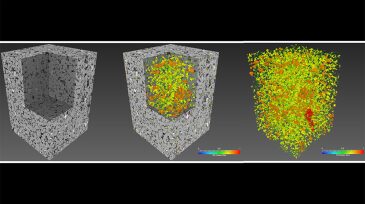
The authors present the results of a detailed experimental study in which underlying pore-level-displacement physics of two- and three-phase flow in a fractured rock sample is investigated with high-resolution X-ray microtomography techniques.
-
The F field in the Middle East currently has more than 40 producing wells in the center of the structure. The uneven well distribution limits the understanding of 3D reservoir characterization, particularly in the flank areas.
-
This study focuses on recent experience in Saudi Arabia with crude-oil compositional analyses during pumpout with a wireline formation tester (WFT).
-
The resistivity index (RI) of Fontainebleau and Bentheimer sandstones was investigated at ambient and reservoir pressures down to low water saturations. The RI measurements show that both sandstones display Archie behavior at elevated pressure.
-
You want to know how to immediately make a step change in your business and improve your own promotion prospects. You want to know the key technologies you should be implementing now. To develop your longer-term strategy, you want an awareness of future trends now. Consider your wish granted.
-
The rising cost of fracturing offers a significant incentive for finding ways to avoid unproductive rock. One entrepreneur says he can use standard well logs to target the slice of rock likely produce most, and avoid the rest.
-
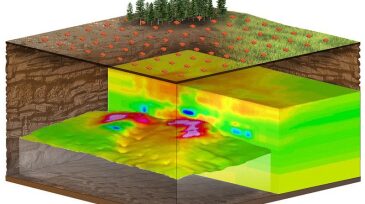
Electromagnetic (EM) reservoir imaging is likely to get more attention from operators thanks to a collaboration between Halliburton and a leader in this emerging technology, GroundMetrics.
-
Need a Faster Measure of Relative Permeability? Take a CT Scan and Follow With Digital Rock AnalysisFaster, lower-cost measures of multiphase permeability of conventional reservoirs are promised by a digital rock analysis method developed by BP and Exa, which is marketing software to measure relative permeability.