Reservoir characterization

Known as Arena, the collaboration aims to improve decision-making across increasingly complex reservoirs and growing volumes of subsurface data.

Three papers are highlighted as the primary contributions because of their broad industry relevance. They focus on improving formation particle-size characterization, expanding the application of openhole gravel packs in depleted and compartmentalized reservoirs, and advancing the understanding of capillary pressure in sand production.

By integrating experimental and mathematical modeling approaches, this work aims to advance the understanding of sand-detachment dynamics and formation instability under varying saturation conditions.
-
 This paper describes the implementation of a one-way wave equation in slowness domain outputting gathers up to Nyquist frequency, which can be used to generate high-resolution seismic sections and amplitude-vs.-offset studies.
 -
This paper describes a novel 6.75-in. logging-while-drilling geochemical tool developed for accurate lithology, mineralogy, well-placement, and geosteering applications in complex reservoirs.
-
This paper presents a self-supervised approach for training a seismic foundation model and demonstrates scenarios in which it is used for seismic data conditioning, interpretation, and inversion through six real-use cases.
-
This paper provides an overview of an operator’s application of 4D time-lapse seismic technology over approximately a decade and includes future perspectives.
-
This paper describes rock-compressibility correlations for carbonated naturally fractured reservoirs in Mexico that considers a range of important geological and dynamic aspects.
-
Data and impartial viewpoints can help de-risk exploration portfolios and keep resource estimates in check.
-
Geophysicist Markos Sourial discusses advances in seismic imaging, the challenges of modern data processing, and what they mean for the next wave of subsurface professionals.
-
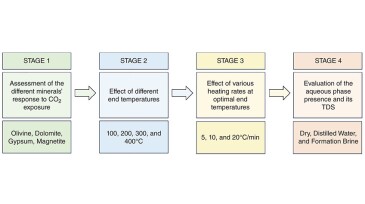
This paper presents a novel methodology for assessing the rapid mineral carbonation of carbon dioxide through geochemical interactions with carbon-, magnesium-, and iron-rich minerals abundant in geological formations.
-
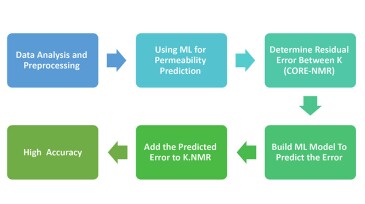
This study integrates physics-based constraints into machine-learning models, thereby improving their predictive accuracy and robustness.
-
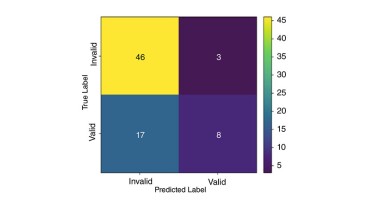
This paper introduces a machine-learning approach that integrates well-logging data to enhance depth selection, thereby increasing the likelihood of obtaining accurate and valuable formation-pressure results.