Reservoir characterization

Known as Arena, the collaboration aims to improve decision-making across increasingly complex reservoirs and growing volumes of subsurface data.

This study explores the carbon-capture and mineralization potential of ultramafic rock powders when exposed to flue gases generated from combustion of crude oil and mesquite-derived charcoal.

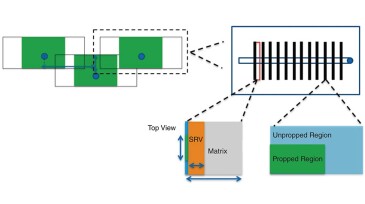
Three papers are highlighted as the primary contributions because of their broad industry relevance. They focus on improving formation particle-size characterization, expanding the application of openhole gravel packs in depleted and compartmentalized reservoirs, and advancing the understanding of capillary pressure in sand production.
-
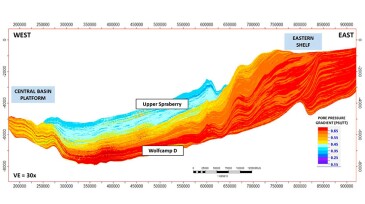
 Regional pore-pressure variations in the Leonardian- and Wolfcampian-age producing strata in the Midland and Delaware basins are studied using a variety of subsurface data.
 -
As reservoir complexity and energy-transition demands grow, the industry is developing new logging technologies, integrating multidisciplinary functions, and conducting new experiments to address new challenges. This Technology Focus highlights three papers from conventional, unconventional, and carbon-storage projects.
-
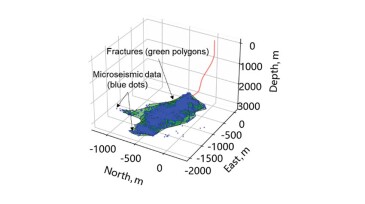
In this paper, an energy-based 3D fracture-reconstruction method is proposed to derive the complex fracture network from microseismic data in a shale gas reservoir.
-
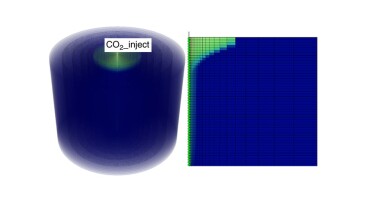
The study uses laboratory and digital core analyses of Berea sandstone to estimate petrophysical and dynamic properties for adjustment of predicted precipitation and flow reduction in reservoir simulation models of intermittent CO₂ injection with aquifer drive.
-
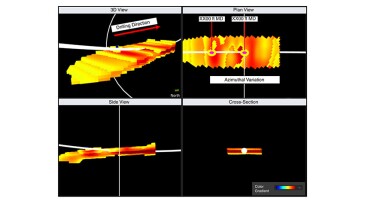
This paper presents a novel workflow for using electromagnetic resistivity-based reservoir mapping logging-while-drilling technologies for successful well placement and multilayer mapping in low-resistivity, low-contrast, thinly laminated clastic reservoirs.
-
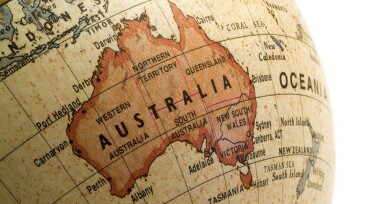
The companies have finished a seismic survey of an underexplored area of the Bonaparte Basin offshore northwest Australia.
-
This paper presents a workflow that combines probabilistic modeling and deep-learning models trained on an ensemble of physics models to improve scalability and reliability for shale and tight-reservoir forecasting.
-
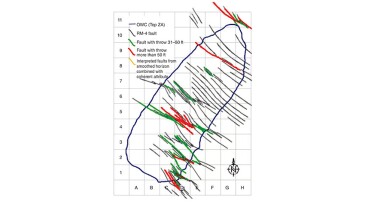
This paper discusses the approach used to sectorize a mature giant carbonate reservoir located onshore Abu Dhabi for the purposes of reservoir management, offtake, and injection balancing.
-
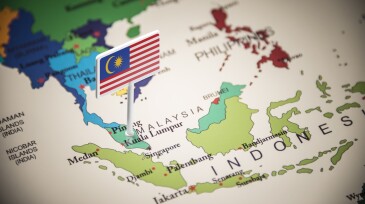
Carbon storage specialist Storegga joins Petronas and ADNOC in a joint study to strategize the build-out of Malaysia’s offshore as a regional CCS hub.
-
The Norwegian data company has launched a 3D seismic survey in the Equatorial Margin area.