Reservoir characterization
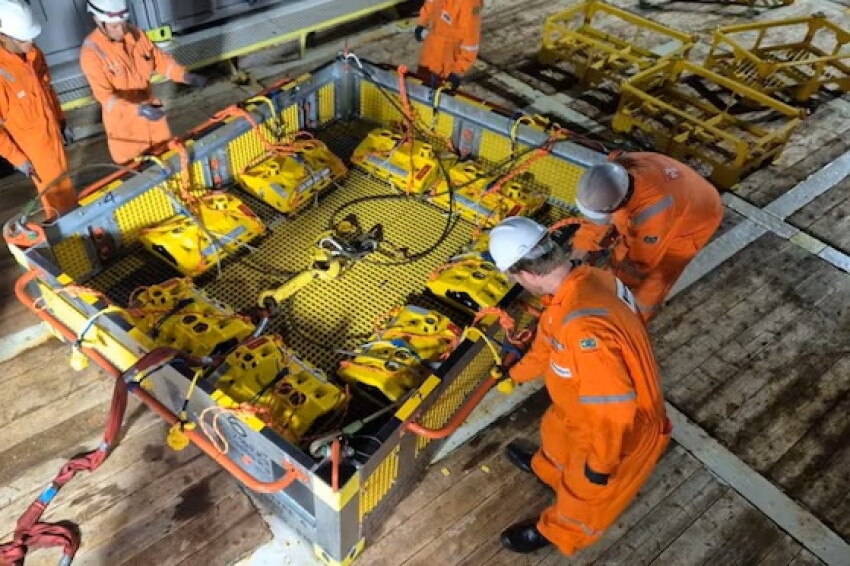
The technology has passed its first phase of qualification, with 84 nodes placed on the seafloor at a depth of 2,000 m to acquire 4D seismic data in the pre-salt Santos Basin.

Xu outlines the thinking and theories that led his team to six world-class oil discoveries that total more than 100 million tons of proven geological reserves since 2021.

This case study from SLB and offshore producer PRIO describes the longest openhole section in Latin America with the highest extended-reach drilling ratio in Brazil’s history.
-
 Understanding well and reservoir performance is the ultimate goal of data gathering.
 -
The Earth is complex in all directions, and hydrocarbon traps require closure—whether structural or stratigraphic or both—in three dimensions.
-
This paper presents two real-field case studies from the Norwegian continental shelf that use available DFA data to support the assumptions made from other data on reservoir architecture between wells.
-
A study was required to determine the origin of the tremor, evaluate if it could be followed by other tremors in the future, and estimate its magnitude.
-
Applying a cutoff consists of defining a threshold value on one or more logs to separate the reservoir intervals in which hydrocarbons are mobile from the gross rock thickness.
-
A US oil company is using its in-house laboratory's digital imaging devices to analyze reservoir rocks in new plays to answer questions raised by complex tight oil formations that cannot be answered using routine core testing methods.
-
For decades, the industry has worked to realize the potential of gathering seismic data in wells. But it is a hostile environment for standard equipment. An inventor has developed a fiber optic system that can handle the heat, but he needs backers to see if it can deliver in the ground.
-
For those in shale exploration, “fracability” is a real word, a critical property, and a point of contention.
-
This paper describes the application of the iterative ensemble smoother to the history matching of the Norne field in the North Sea.
-
In the past decade, there has been a great deal of research and progress in the development of computational methods to assist reservoir engineers in the arduous task of history matching their models.