Reservoir

Industry experts at URTeC assessed more than a decade of unconventional growth while discussing where productivity gains will come from next.
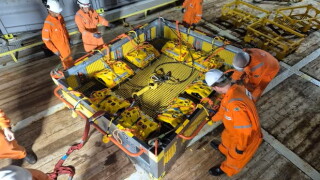
The technology has passed its first phase of qualification, with 84 nodes placed on the seafloor at a depth of 2,000 m to acquire 4D seismic data in the pre-salt Santos Basin.

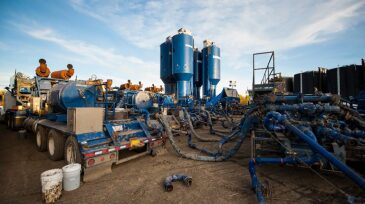
Chevron and Halliburton describe how they built and deployed the fully autonomous closed-loop fracturing system that enables subsurface-driven optimization.
-
 The agency updated its methodology and production volume estimates to factor increasing production from new, emerging plays as well as older plays that have rebounded thanks to drilling advancements.
 -
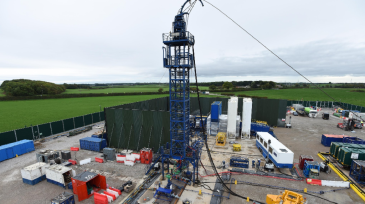
UK’s first horizontal shale well has yielded positive results after an initial flow test. But further testing—and fracturing of a second well—will have to come amid a continuation of UK’s stringent regulations on induced seismicity.
-
The struggle to overcome the challenge of frac hits has led to a critical dialogue about which pathway the shale sector should take. One idea is to simply put the problem at the center of every major decision.
-
Electromagnetic images can show where water flows during a hydraulic fracture. A test in the Anadarko Basin showed a fault there was a bigger hazard than expected.
-
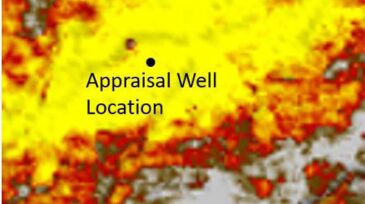
This paper describes the acquisition and interpretation of long-term pressure-buildup data in a plugged and abandoned deepwater appraisal well.
-
Diagnostic fracture injection tests (DFITs) incur direct and indirect costs resulting from the tests themselves and the extended time required for the pressure falloff, which delays the completion of the well. The benefits, therefore, must outweigh the costs if the test is to be justified.
-
The state-run offshore company has found a gas and condensate field that holds an estimated 250 million BOE.
-
Using drilling data and a downhole acoustic signal, developers aim to assess unconventional fracture networks in real time and give engineers ability to customize each stage.
-
The country continues to step up its delivery of shale gas, but has a long ways to go to meet the government's target.
-
BP announced four discoveries in the Gulf of Mexico near existing platforms. It use advanced seismic imaging to identify resources in deepwater locations that can be developed cost effectively using platforms nearby.