Reservoir

Industry experts at URTeC assessed more than a decade of unconventional growth while discussing where productivity gains will come from next.
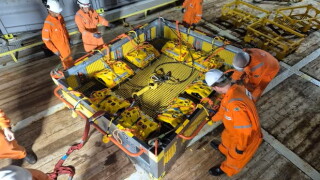
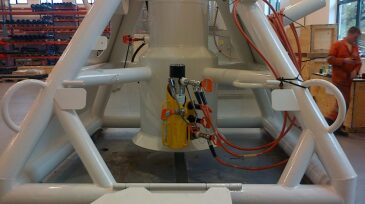
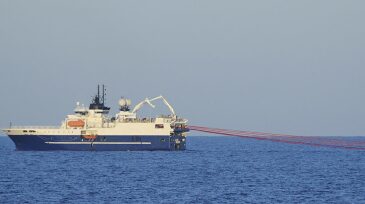
The technology has passed its first phase of qualification, with 84 nodes placed on the seafloor at a depth of 2,000 m to acquire 4D seismic data in the pre-salt Santos Basin.

Chevron and Halliburton describe how they built and deployed the fully autonomous closed-loop fracturing system that enables subsurface-driven optimization.
-
 The Norwegian operator’s disclosure marks the first time all subsurface and production data from a field on the NCS will be available for public viewing.
 -
Acquiring data from an abandoned subsea well has been done before, but never quite like this.
-
A horizontal-steam-injection pilot project has been under way for the last 4 years in the Kern River heavy-oil field in the southern San Joaquin Valley of California.
-
The evolution of horizontal drilling and multistage completions has changed matrix stimulation from the “more acid, better result” belief to effective lateral distribution and deeper penetration with less acid.
-
CO2 injection is a successful EOR technology that has been deployed extensively in the Permian Basin. Further expansion of CO2 EOR has been limited by the availability of affordable CO2 rather than the existence of suitable target reservoirs. This situation may be about to change.
-
Saudi Aramco is tapping Halliburton’s expertise in developing unconventional resources to increase domestic gas production, a pillar of its long-term strategy.
-
Oil and gas demand is stable or rising in all regions of the world, meaning additional investments are needed for production to keep up. Growing indigenous requirements reduce volumes available for export in many regions, IOGP’s new Global Production Report shows.
-
Understanding the behavior of subsea reservoirs traditionally takes months and millions of dollars. A new company says it can do this with a very targeted way in less than a week, for only thousands of dollars.
-
Wells are starting to come on stronger than expected, which is putting a new emphasis on orginizing all the other ingredients needed for shale production: more rigs, roads, pipelines, water, and sand.
-
While the floating liquefied-natural-gas (FLNG) option initially looked promising, high capital expenditure and very high operational expense (OPEX) have limited its potential application, with four potential FLNG projects being canceled in Australasia in the last 2 years.