Reservoir

Industry experts at URTeC assessed more than a decade of unconventional growth while discussing where productivity gains will come from next.
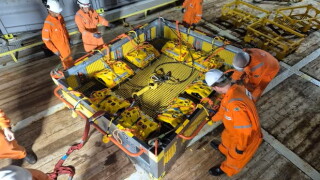
The technology has passed its first phase of qualification, with 84 nodes placed on the seafloor at a depth of 2,000 m to acquire 4D seismic data in the pre-salt Santos Basin.

Chevron and Halliburton describe how they built and deployed the fully autonomous closed-loop fracturing system that enables subsurface-driven optimization.
-
 The complete paper presents different methods of using pressure-transient data from WFTs; many of these methods are summarized here.
 -
The purpose of the complete paper is to create a performance-based reservoir characterization by use of production data (measured rates and pressures) from a selected gas-condensate region within the Eagle Ford Shale.
-
The complete paper aims at a better understanding of the effect of channel content in complex fluvial channel systems on well-test-derivative responses.
-
Many startup companies promote the wonders of analytics but few can ensure that the methods used and data generated live up to the hype.
-
ConocoPhillips and Statoil Petroleum have signed a joint-sponsorship-development agreement with Visuray Technology to fund development of a downhole cement-integrity-evaluation technology that will have the capability of evaluating cement integrity even behind multiple casing strings.
-
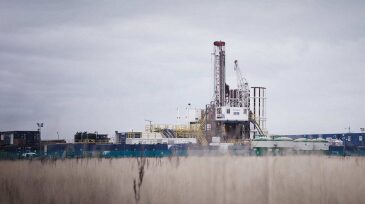
Overcoming numerous regulatory hurdles, Cuadrilla Resources is pressing ahead with its plans to fracture a well in the UK for the first time since 2011.
-
Widely held images of what happens when a well is fractured often bear little resemblance to what actually happens underground.
-
Shale gas is one of least sustainable options for producing electricity, according to new research from The University of Manchester, which considered environmental, economic, and social sustainability factors.
-
Progress in chemical EOR, from polymer to alkaline/surfactant/polymer, has been significant. Not only are there new chemicals with improved recovery capabilities, but also the cost of the chemicals is being reduced continuously. All those factors led to more operators using chemical EOR.
-
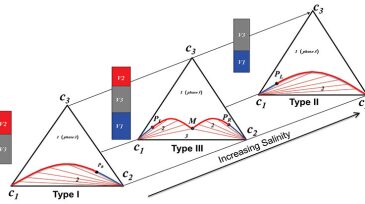
The complete paper presents a new three-phase relative permeability model for use in chemical-flooding simulators.