Reservoir

Industry experts at URTeC assessed more than a decade of unconventional growth while discussing where productivity gains will come from next.
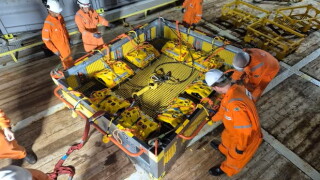
The technology has passed its first phase of qualification, with 84 nodes placed on the seafloor at a depth of 2,000 m to acquire 4D seismic data in the pre-salt Santos Basin.

Chevron and Halliburton describe how they built and deployed the fully autonomous closed-loop fracturing system that enables subsurface-driven optimization.
-
 Because of their heterogeneity, carbonate reservoirs are more difficult to model than clastic reservoirs. The main difficulty comes from the number of different pore types, compared with the typical interparticle pore type in clastics.
 -
This paper addresses the challenges in modeling highly unstable waterflooding, using both a conventional Darcy-type simulator and an adaptive dynamic prenetwork model, by comparing the simulated results with experimental data including saturation maps.
-
You want to know how to immediately make a step change in your business and improve your own promotion prospects. You want to know the key technologies you should be implementing now. To develop your longer-term strategy, you want an awareness of future trends now. Consider your wish granted.
-
The rising cost of fracturing offers a significant incentive for finding ways to avoid unproductive rock. One entrepreneur says he can use standard well logs to target the slice of rock likely produce most, and avoid the rest.
-
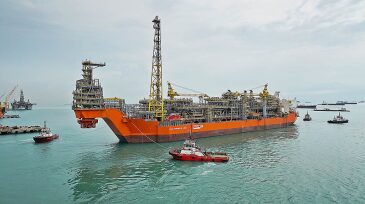
Low oil prices have made the goal of this Petrobras project and its four partners to lower the break-even price of operating to USD 35/bbl.
-
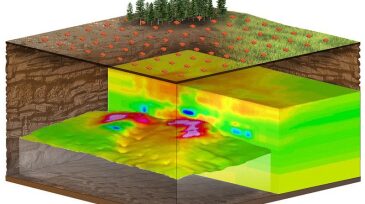
Electromagnetic (EM) reservoir imaging is likely to get more attention from operators thanks to a collaboration between Halliburton and a leader in this emerging technology, GroundMetrics.
-
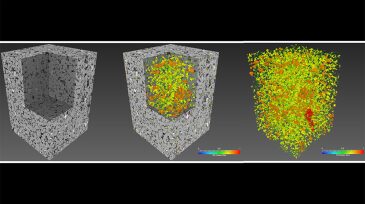
Need a Faster Measure of Relative Permeability? Take a CT Scan and Follow With Digital Rock AnalysisFaster, lower-cost measures of multiphase permeability of conventional reservoirs are promised by a digital rock analysis method developed by BP and Exa, which is marketing software to measure relative permeability.
-
This paper describes both design and economic considerations that lead to the selection of vacuum-insulated tubing (VIT) or vacuum-insulated casing (VIC) for the completion of thermal wells.
-
This study aims to investigate the efficacy and feasibility of cryogenic-fracturing technology in enhancing the permeability of unconventional-reservoir-rock analogs.
-
This paper presents an overview of the SACROC Unit’s activity focusing on different carbon dioxide (CO2) injection and water-alternating-gas (WAG) projects that have made the SACROC unit one of the most successful CO2 injection projects in the world.