Reservoir

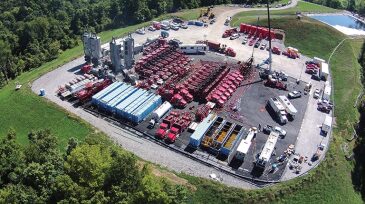
The next wave of unconventional growth will likely come from basins in Argentina, the Middle East, Australia, and elsewhere, fueled by expertise gained from shale plays in North America.

Industry experts at URTeC assessed more than a decade of unconventional growth while discussing where productivity gains will come from next.
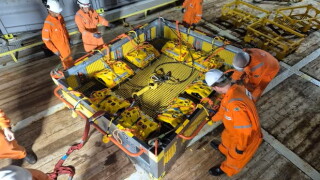
The technology has passed its first phase of qualification, with 84 nodes placed on the seafloor at a depth of 2,000 m to acquire 4D seismic data in the pre-salt Santos Basin.
-
 While the collapse in oil price is reshaping opinions about the North American shale revolution and the outlook for oil producers, natural gas producers in the United States are in a somewhat different position
 -
Shale-gas resources were explored in Saudi Arabia by adopting a “technology-driven” approach against the US-based approach that might be termed the “factory” or “statistical” approach.
-
This paper gives the recommended MSF horizontal-well spacing for several development scenarios in Saudi Arabian gas-reservoir environments.
-
Pulled directly from the reservoir rock, core samples provide critical data used to determine how exploration should proceed. Until recently, core analysis remained old school, however, there is an ongoing transition to bring the process of core description into the digital age.
-
Although refracturing is a topic that has gained a lot of interest, many shale producers have been sitting on the sidelines because early results did not justify the spending
-
New seismic data gathering techniques promise better images for less by gathering more data quicker, seeing past obstructions, and seeking out scarce frequencies.
-
A tight gas carbonate reservoir with no oil rim in a supergiant onshore gas field in Abu Dhabi was targeted for stimulation during a field review to increase field production.
-
To understand production from shale reservoirs, the role of hydraulically induced fractures, natural fractures, and their interaction in a formation must be captured.
-
An 18-well numerical-simulation model was built to represent an operator’s Lower Shaunavon waterflood-pilot area. Numerical simulation was used, and a history match on the pilot area was performed.
-
Estimates of tight-reservoir hydrocarbon reserves continue to vary with uncertainty. What is known with certainty, though, is that current recovery rates are low and the upside is substantial.