Reservoir

The next wave of unconventional growth will likely come from basins in Argentina, the Middle East, Australia, and elsewhere, fueled by expertise gained from shale plays in North America.

Industry experts at URTeC assessed more than a decade of unconventional growth while discussing where productivity gains will come from next.
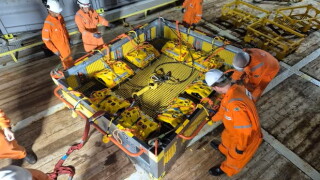
The technology has passed its first phase of qualification, with 84 nodes placed on the seafloor at a depth of 2,000 m to acquire 4D seismic data in the pre-salt Santos Basin.
-
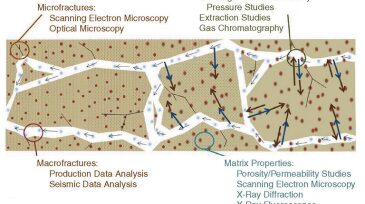
 Estimates of tight-reservoir hydrocarbon reserves continue to vary with uncertainty. What is known with certainty, though, is that current recovery rates are low and the upside is substantial.
 -
To optimize the development plan of a giant carbonate reservoir offshore Abu Dhabi to extend the production plateau and improve recovery, detailed sector models were used to facilitate the large number of required simulation runs.
-
Oil quality and drilling-pad constraints for a viscous-oil field defined a development scheme that consisted of a waterflood line drive with horizontal producers and water-injection (WINJ) wells side by side.
-
The ability to predict the effect of faults on locating remaining hydrocarbon is critical to optimal well-placement, reservoir-management, and field development decisions.
-
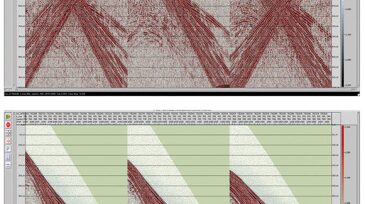
The word “broadband” is used to sell a lot of what is new in offshore seismic. It can mean different things depending on who is speaking.
-
Companies are using an increasing number of sound shots to gather more data in a shorter time frame.
-
Developing the Mad Dog discovery appeared to be high-risk because of the difficulty in mapping the subsurface because of the thick layer of salt underlying the region.
-
Enventure Global Technology is working to convince operators that its solid expandable steel liners perform better than chemical diverter agents for refracturing operations. Its technology is called the ESeal ReFrac Liner.
-
The pursuit of sweet spots in unconventional oil and gas plays is driving the creation of an emerging set of data-driven systems to measure, map, and predict how wells will perform in unconventional reservoirs.
-
The Bakken Petroleum System, which includes the Bakken and Three Forks shales in North America, is estimated to hold as much as 900 billion bbl of original oil in place.