Reservoir

The next wave of unconventional growth will likely come from basins in Argentina, the Middle East, Australia, and elsewhere, fueled by expertise gained from shale plays in North America.

Industry experts at URTeC assessed more than a decade of unconventional growth while discussing where productivity gains will come from next.
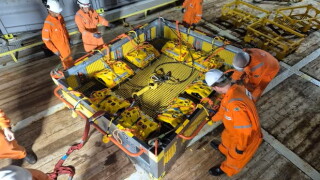
The technology has passed its first phase of qualification, with 84 nodes placed on the seafloor at a depth of 2,000 m to acquire 4D seismic data in the pre-salt Santos Basin.
-
 Produced water from chemical floods can cause problems for separation and water treatment equipment due to the polymers and surfactants used. Challenges are greater offshore where space limitations can affect treatment options.
 -
Recent experience with a newly introduced sampling-while-drilling service has shown that it is possible to make reliable downhole formation-fluid-property estimates during sampling-while-drilling operations.
-
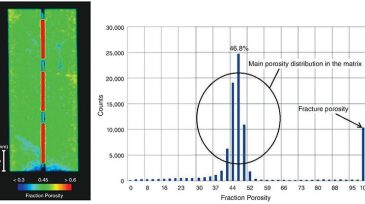
This work demonstrates that molecular diffusion may be a viable oil-recovery mechanism in fractured reservoirs during injection of carbon dioxide (CO2) for enhanced oil recovery (EOR).
-
In this paper, two different EGR methods are investigated and systematically compared in terms of efficiency.
-
In this study, the authors use measured CO2/brine relative permeability data available in the literature to study the behavior of the data obtained for various rocks.
-
This paper introduces a new carbon dioxide (CO2) -hybrid fracturing-fluid design that intends to improve production from ultratight reservoirs and reduces freshwater usage.
-
The combination of technology advances and world politics results in oil supply-and-demand cycles that have occurred repeatedly over the past 100 years and that have affected and will continue to affect our careers.
-
History shows that technology adapts to the economic conditions. What is the optimum technology in a high-price environment is not optimum for a low-price scenario.
-
A normal five-spot polymer-flooding pilot has been conducted at the Mangala field, one of the largest onshore fields in India, and results are encouraging
-
Several studies explored the possibility of improving both areal and vertical sweep efficiency in mature water-alternating-gas (WAG) patterns in the Magnus oil field.