Reservoir

This work describes a study in which distributed data parallel training, paired with a node-local caching pipeline, enabled efficient multigraphics-processing-unit scaling for a CO₂-storage graph-neural-network surrogate while maintaining generalization.

This paper presents a novel reservoir engineering/reservoir simulation approach—a data-driven interwell-connectivity model augmented as a digital twin—to predict reservoir dynamics and optimize operations in the Changqing oil field of China.

This work uses a novel pseudosteady-state-based simulation to reduce training-data-generation cost while maintaining high-performance predictions of data-driven proxy models for carbon-sequestration projects.
-
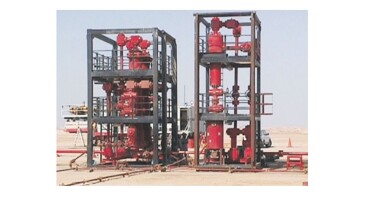
 This study introduces a cleanup- and flowback-testing approach incorporating advanced solids-separation technology, a portable solution, equipment automation, improved metallurgy, and enhanced safety standards.
 -
Technical papers reviewed for this feature are laden with novel technology borne of the quest to understand and solve complex geological structures and features that ultimately will improve our collective effort toward fostering efficient energy production. The three papers presented here are focused on innovative approaches to handling such complexities.
-
Diversified Energy announces its largest deal yet to buy private equity-owned Maverick Natural Resources.
-
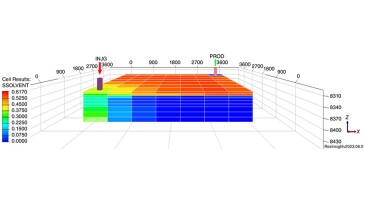
A numerical simulation study based on experimental data of 2D and 3D models is presented to examine immiscible fingering during field-scale polymer-enhanced oil recovery.
-
This selection of cutting-edge articles spotlights how experimental concepts are now driving cost-saving strategies in unconventional development. It’s a reminder that innovation often comes from creative thinking, not just new tools or tech partnerships.
-
Rystad Energy and Wood Mackenzie highlight key factors shaping the balancing act in the upstream oil market.
-
The authors present an open-source framework for the development and evaluation of machine-learning-assisted data-driven models of CO₂ enhanced oil recovery processes to predict oil production and CO₂ retention.
-
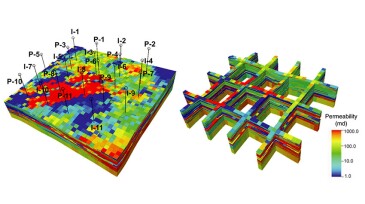
The authors of this paper propose hybrid models, combining machine learning and a physics-based approach, for rapid production forecasting and reservoir-connectivity characterization using routine injection or production and pressure data.
-
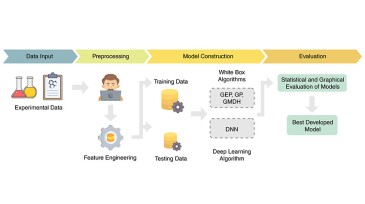
The objective of this study is to develop an explainable data-driven method using five different methods to create a model using a multidimensional data set with more than 700 rows of data for predicting minimum miscibility pressure.
-
CO₂ enhanced oil recovery (EOR) provides an attractive and commercially established technique to store CO₂ underground. EOR modeling is crucial because complex simulation is required to predict the behavior of CO₂ and its interaction with the oil and reservoir rock.