Reservoir

This case study presents a procedure in which the operator compared production from wells with adjusted wettability to a control group, finding that the adjustments resulted in significant improvements in production and reductions in produced water.

This year’s selected papers showcase meaningful advances across condensate‑rich tight gas, tight sandstones, and coalbed methane reservoirs, each contributing new tools for improving predictability and field-development efficiency.
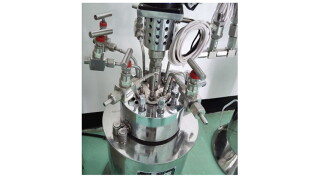
This study aims to systematically assess casing integrity and corrosion risks associated with CO2 injection in oil-recovery operations.
-
 How do you use the terms improved oil recovery and enhanced oil recovery? Complete a simple, three-question survey to share your opinion. The survey closes on 15 October.
 -
Suriname's wait to become a significant oil producer may be nearing an end as the French supermajor begins early development studies.
-
Diamondback Energy has agreed to spin off its water operations. Now, who’s next?
-
On a pro forma basis, the mineral and royalty arm of the Midland-based oil company owns interests covering more than 32,000 net acres in the Permian Basin.
-
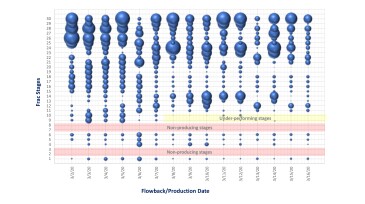
SponsoredThe data that comes with mapping flow behavior at the stage level of unconventional wells was once accessible only through the installation of costly and intrusive diagnostic methodologies like fiber optic or running production logging. New-generation FloTrac ultrahigh-resolution nanoparticle tracer technology with subatomic spectroscopic measurement techniques now de…
-
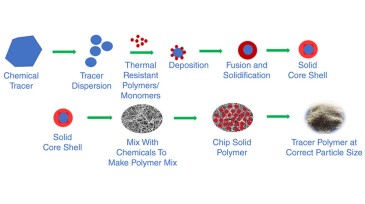
This paper sheds light on newer frontiers of tracer applications with unconventional uses to gain flow insights from an oil and gas reservoir.
-
This paper presents a comprehensive technical review of applications of distributed acoustic sensing.
-
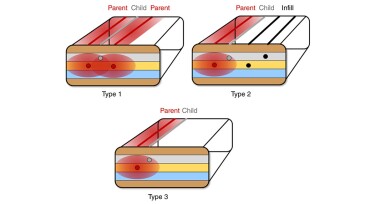
The authors of this paper analyze a robust, well-distributed parent/child well data set using a combination of available empirical data and numerical simulation outputs to develop a predictive machine-learning model.
-
This paper summarizes a collaborative industry study to compare observations between shale-play data sets and basins, develop general insights into parent/child interactions, and provide customized economic optimization recommendations.
-
In this paper, example machine-learning models were trained using geologic, completion, and spacing parameters to predict production across the primary developed formations within the Midland Basin.